How Much Do Geisha Girls Get Paid?
No published salary exists for geisha, who are paid by the hour for each engagement and carry their own lessons and kimono costs, so the honest answer to how much do geisha girls get paid is that it depends on how often she is called. This page separates what a guest pays, about ¥50,000 ($314) for two hours in one published estimate, from what the woman keeps, and explains the okiya debts, the maiko allowance and how to pay for a real geisha show in Kyoto.
Quick answer
No published salary exists: a geisha is paid by the hour for each engagement she is called to, and a published guide puts a two-hour session at about ¥50,000 ($314), before she pays for lessons, kimono and her okiya.
Key takeaways
- Geisha are independent professionals paid per engagement, not employees on a monthly wage, according to the Asakusa district's own teahouse Miyakodori
- The guest's bill is not her take-home pay: tour director Yoko Hori says a two-hour session of about ¥50,000 ($314) also pays for the kimono and hairstyle
- A maiko hands her earnings to the okiya and receives a small allowance until her training debts are cleared, according to Tsunagu Japan
- One kimono costs about ¥300,000 ($1,887), so the okiya's investment is large and repaid slowly, All About Japan reports
- Nobody publishes an average income, so any exact salary you read online is a guess
- To see what a booked evening costs, start with the geisha show cost guide or the one-hour maiko show
What do the bookable maiko shows cost?
Each booked show prices the performer, the room and the operator together. They sit well below a private banquet, and none of them reveals what the woman herself receives.
 from $48
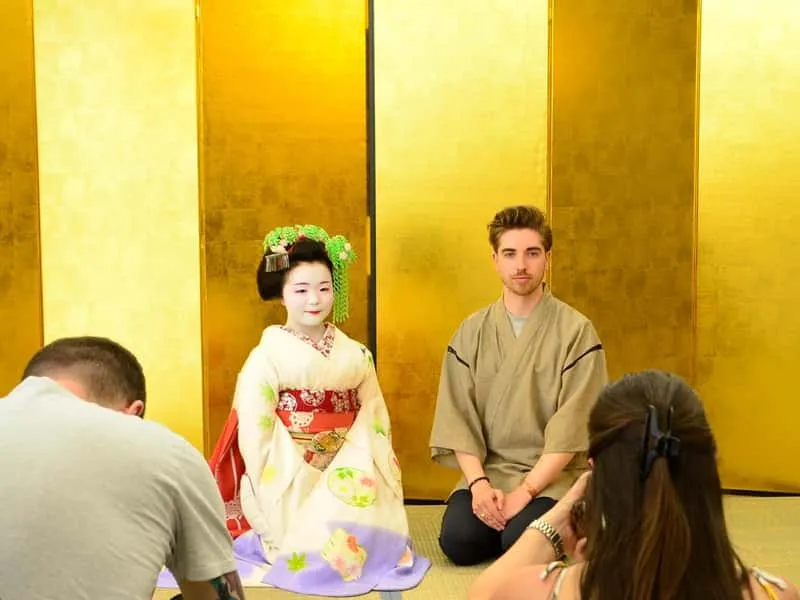
Meet a Real Kyoto Maiko — Intimate Show, Stories & Keepsake Photo
An affordable meet-and-greet with a Kyoto maiko, including a short dance, a friendly chat about apprentice life, and a keepsake photo. The most budget-friendly way to meet a…
- Meet and greet a real Kyoto maiko
- Short traditional dance performance
- Learn about apprentice geisha life
- Keepsake photo included — best value option
 from $81
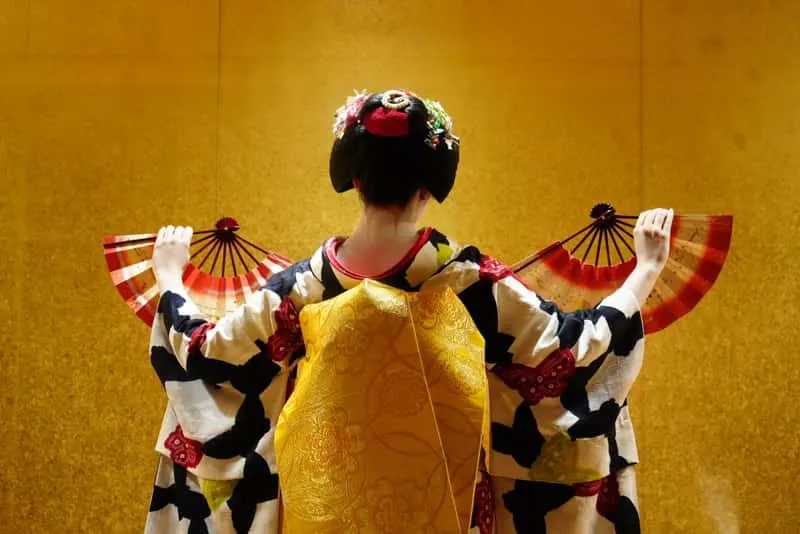
Authentic One-Hour Kyoto Geisha Show with Live Q&A and Photos
A focused one-hour geisha show in Kyoto featuring a live dance performance, an interactive Q&A, and a photo session with the performer. A quick, authentic way to see…
- Live geisha dance performance
- Interactive question-and-answer session
- Photos with the geisha included
- Near Kitano Tenmangu Shrine — easy to combine
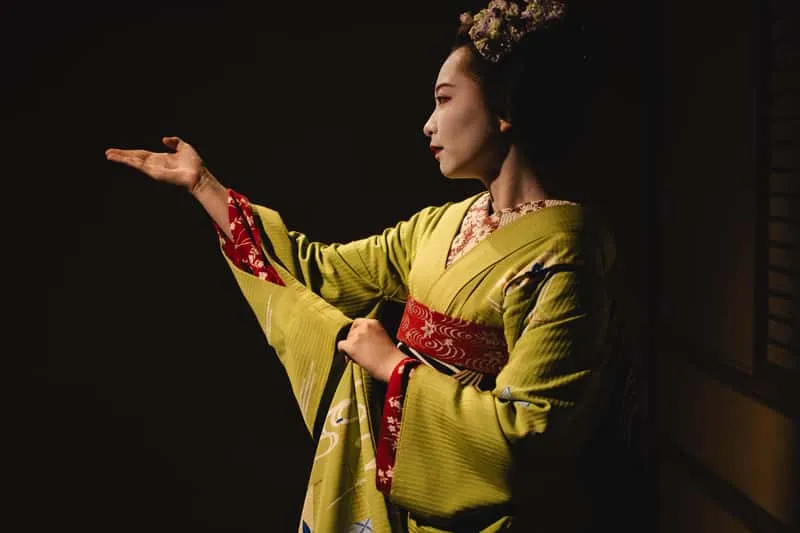 from $720 / group
Private Hour with a Kyoto Apprentice Maiko — Dance, Tea & Photos
A private geisha show in Kyoto built around one apprentice maiko, with a traditional dance, a relaxed Q&A, and time for photos in full kimono. Exclusive booking for…
- Private group booking — the room is yours alone
- Traditional dance performed by an apprentice maiko
- Casual Q&A to learn about the world of the geisha
- Photos with the maiko in full kimono
How much do geisha girls get paid?
No figure is published, and anyone quoting one is estimating. Geisha are not salaried. The Asakusa teahouse Miyakodori, which calls its geisha for each banquet, says they are independent professionals registered with the district's kenban, the geisha office, and that there is no monthly wage.
What a geisha earns depends on how often she is called and how often guests ask for her by name.
The one number that exists is the price of her time. Wikipedia records that the charge, once set by the time one incense stick took to burn, became a flat fee per hour in the nineteenth century, and that Kyoto calls it hanadai, the flower fee. The sections below show what published guides say that hour costs and how much of it the woman keeps.
Everything here concerns the practice, not any named person's income.
Source: Miyakodori, Wikipedia.
Do geisha get a salary?
No. Miyakodori states that geisha are not employees of the venues where they perform. A venue or teahouse asks the kenban to send her, she is paid for that engagement, and the district's fee schedule has historically been the same from one licensed room to the next. When she is called outside those rooms, to an unlicensed restaurant or another district, Miyakodori says the engagement is called tode, going far, and the fee is higher.
A history of the Asakusa district quoted by Miyakodori records what the kenban told young women who came to ask about the work: this is not a salaried job, you are paid for the engagements you are called to, and your lessons and kimono come out of your own pocket. That description is from Tokyo. Kyoto's five districts run on the same principle of a registry office, an okiya and a fee per engagement, as Wikipedia describes, though no Kyoto district publishes its rates.
Source: Miyakodori, Wikipedia.
What does an hour with a geisha cost a guest?
This table compares the three published estimates of what guests pay, with the source of each and yen converted at ¥159 to the dollar. They measure the guest's bill, not the woman's pay.
| Source | What it measures | Yen | About in USD |
|---|---|---|---|
| Yoko Hori, Tokyo tour director, in Silversea | Commonly, a two-hour session | ¥50,000 | $314 |
| Japan Guide | A full geiko dinner booked through an agency, per maiko or geiko | ¥50,000 | $314 |
| Japan Guide | The meal at that dinner, per person | ¥10,000 to ¥30,000 | $63 to $189 |
| Tsunagu Japan | A few hours in a geisha's company, food and drink on top | Several hundred dollars | Several hundred |
Read the first two rows with care. One measures two hours and the other a whole dinner, so they describe different evenings that happen to share a round number. The third row is a food cost and is not part of what the woman earns.
The cost guide works out what a small party pays in total for an agency-booked dinner.
Prices of this kind apply to a real ozashiki, a private banquet at an ochaya or ryotei. Tsunagu Japan notes that arranging one usually needs a referral from an existing client of the okiya, which is why most visitors never see such a bill.
Source: Silversea, Japan Guide, Tsunagu Japan.
How much of the fee does the geisha keep?
Less than the bill suggests, and the split is not published. Hori says the roughly ¥50,000 for two hours pays not only the geisha's wage but also the costly kimono and the hairstyle she wears. Add the hour spent in full makeup before every session and the guest's bill is clearly paying for a whole working apparatus, not a single wage.
Out of what she does receive, Miyakodori lists three costs. Lessons come first, because Asakusa geisha take weekly lessons in dance and music for as long as they work and pay for them themselves. Formal kimono, obi and accessories for every season come next.
The third is the cost of appearing in the district's recitals and of the weddings, funerals and celebrations of the geisha world. The same history says the longer a geisha works, the more goes out.
Source: Silversea, Miyakodori.
What else is on the bill besides the geisha's time?
At a real banquet, a good deal. Japan Guide says an ochaya adds the entire evening's expenses, including the costs for the room, food, geiko and taxi rides, to a running tab, and that an interpreter can be arranged at extra cost when the booking goes through an agency. Tsunagu Japan adds that food and drink are charged on top of the few hours in a geisha's company.
That is why the guest's total says so little about the woman's earnings. The hourly fee is one line among several, and the room, the meal and the transport belong to other people. When a published guide quotes ¥50,000 for two hours, treat it as the price of the geisha's time and not of the evening.
Source: Japan Guide, Tsunagu Japan.
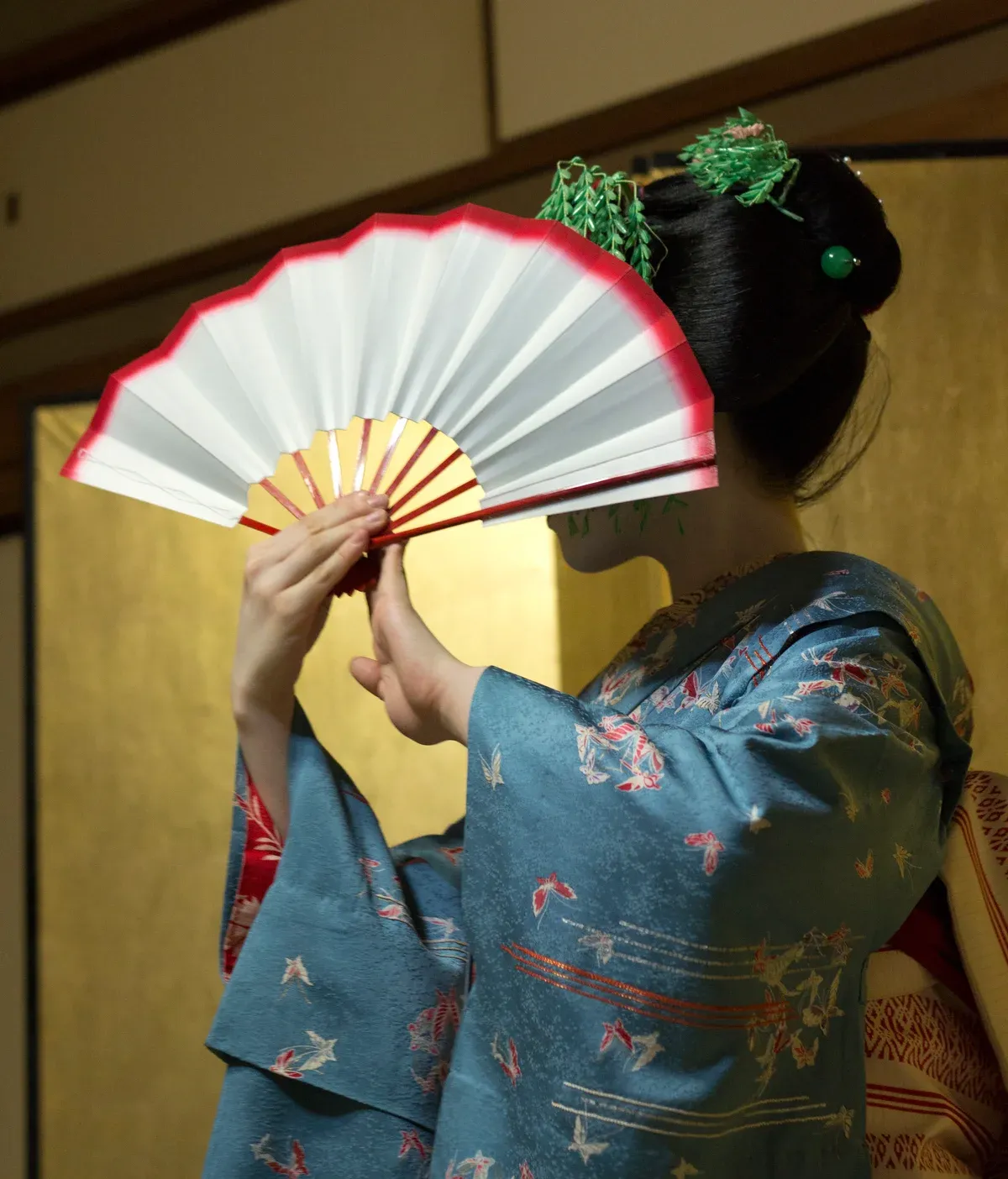
A private dance performance at an ochaya. Photo: Japanexperterna.se, CC BY-SA 3.0, via Wikimedia Commons
Do maiko get paid?
Only a small allowance, until the training debts are cleared. Tsunagu Japan says that during her apprenticeship any earnings a maiko makes go directly to the okiya's mother, the okaasan, who manages her training, board, food and kimono wardrobe, and only a small allowance reaches the maiko. Once a geisha has paid off her debts she keeps what she earns.
Wikipedia describes the same arrangement. A maiko is bonded under contract to her okiya, which usually supplies food, board, kimono, obi and tools of the trade, though she may fund it herself through a loan or an outside guarantor. The repayment can continue after she becomes a geisha, and only when the debts are settled can she claim her entire earnings and work independently.
In Tokyo, the apprentice's name hangyoku, half jewel, comes from the old system in which her fee was half that of a full geisha, Miyakodori explains.
Source: Tsunagu Japan, Wikipedia, Miyakodori.
Why is it so expensive to become a geisha?
This table lists the costs a geisha or her okiya carries, who pays each one and the figure where a published one exists. Yen are converted at ¥159 to the dollar.
| Cost | Who carries it | Published figure |
|---|---|---|
| One kimono | The okiya, repaid from her earnings | About ¥300,000 ($1,887), All About Japan |
| Food, board, tools of the trade as a maiko | The okiya, or a loan or guarantor | No figure published |
| Weekly lessons in dance and music | The geisha herself in Asakusa | No figure published |
| Formal kimono and obi for each season | The geisha, as her career goes on | No figure published |
| Recital costs and ceremonies of the district | The geisha | No figure published |
Where a cost has no published figure, the table says so. The structure is the same everywhere: someone else pays first and the geisha repays over years. That is also the economic root of the okiya system, and it explains why geisha who marry leave the profession in the Kyoto tradition.
Source: All About Japan, Wikipedia, Miyakodori.
Did geisha once earn more than a sumo champion?
On tax paperwork, yes. A historian of Tokyo's geisha districts, quoted by Miyakodori, notes that in 1935 a geisha in the first-rank districts of Shinbashi and Yanagibashi paid a tax of eleven yen a month, while a top-ranked sumo wrestler paid a hundred and twenty yen a year. Twelve monthly payments of eleven yen come to a hundred and thirty-two yen a year, so the geisha paid more than the yokozuna.
The same account says geisha fees were taxed by the rank of the district until 1944, and that at a time when few careers were open to women, geisha were among the very few who earned their own living through their art and could support their families. The tax figure shows a profession that once earned well. It says nothing about what an individual earns today.
Source: Miyakodori.
Do geisha make a lot of money today?
Some do and many do not, and the shrinking number of rooms matters more than any rate card. Miyakodori says Asakusa had more than 140 geisha in 1969 and has around twenty today. As old restaurants and teahouses closed, fewer rooms existed to call a geisha to, fewer engagements meant less income, and fewer young women could make a living at it.
In Kyoto the community is also small. National Geographic, citing an Asahi Shimbun count, puts it at about 161 geiko and 68 maiko across the five districts in 2021, with the pandemic lowering numbers and interest plateauing. Whether a geiko earns well depends on how often guests ask for her.
Popularity matters because, as Tsunagu Japan puts it, in-demand geisha can charge more per hour and the profession has no guaranteed regular income. See how many geisha still exist for the district counts.
Source: Miyakodori, National Geographic, Tsunagu Japan.
Who was the highest paid geisha?
No geisha is on record as the highest paid, because individual earnings are private. Individual payments are private, and Miyakodori says venues do not publish them. What the record does show is that fees followed the district's rank and the number of engagements, not a single star's rate.
The questions people ask in practice are narrower. How a senior geiko is looked after later in life is covered in what happens to geishas when they get old, and what the work consists of is in what a geisha does. Both help explain why the pay question has no simple answer.
What is the realistic way to pay a geisha for her time?
Book a show that includes a maiko or geiko, because that is how a visitor pays for her time without needing an introduction. The performer, the room and the operator are priced into one fee, and the listing shows the whole price up front.
This table sets out the booked formats by price, length and what the performer does.
| Format | Price | Length | What the maiko does |
|---|---|---|---|
| Meet a maiko | $48 | 45 minutes | Short dance, stories, one keepsake photo |
| One-hour show with Q&A | $81 | 1 hour | Dance, live questions, photos |
| Gion dinner show | $105 | 3 to 3.5 hours | Show after a guided walk and dinner |
| Private hour | $720 per group | 1.5 hours | One apprentice for your group only |
Start at the homepage for every current geisha show in Kyoto with live prices, or read how to see a geisha without a tour if you want the free and ticketed public options first.
Frequently Asked Questions
Do geisha pay for their own kimono?
Eventually, yes. The okiya usually supplies a maiko's kimono and she repays it from earnings. One kimono costs about ¥300,000 ($1,887), All About Japan says.
Do geisha get tips?
Tipping is not part of Japanese service culture, and tips are not part of a geisha's income. Hospitality is priced into the hourly fee.
Is a geisha's pay the same in Kyoto and Tokyo?
No published figure compares them. In both places she is paid per engagement through a registry office and an okiya.
How much does it cost to book a maiko?
The meet-a-maiko show costs $48 and the private hour costs $720 per group.
Do maiko keep their earnings?
Not at first. Tsunagu Japan says a maiko's earnings go to the okaasan and she receives a small allowance until debts are repaid.
Why do geisha charge by the hour?
The fee was once set by the time an incense stick took to burn. Wikipedia says the nineteenth century turned it into a flat hourly fee.