How to See a Geiko or Maiko in Kyoto Without Booking a Tour
You can see a geiko or maiko in Kyoto entirely on your own, through the public seasonal dances, the daily Gion Corner show and a handful of open-air festivals, no booking required for any of them. What you cannot get without a booking is a real conversation with a maiko, the kind where she speaks with you directly rather than performing for a full theatre. This page compares the honest options for how to see a geisha in kyoto without a guide: the odori calendar, Gion Corner's mechanics, and which festivals actually bring the districts' women into public view. Walking the streets at dusk works too, on luck rather than a plan. For the version with a scheduled introduction, see our bookable maiko performances in Kyoto.
Quick answer
Yes, entirely on your own: the four spring odori dances, the daily Gion Corner show and public festivals like Baikasai all require nothing but a ticket you buy yourself. What DIY cannot deliver is a private conversation with a maiko, since that only happens inside a booking she has agreed to in advance.
Key takeaways
- The seasonal odori dances are the single best value on this list, but each one runs for a few weeks a year only
- Gion Corner needs no reservation and runs nightly, though the maiko dance is one segment of a seven-art sampler, not a full performance
- Baikasai on February 25 and a handful of other festivals bring geiko and maiko outdoors for free, on fixed public dates
- Walking the districts around dusk gives you, at best, a passing glimpse of a woman heading to an appointment, which is luck, not a plan; our Gion photography rules guide covers the courtesy that goes with it
- A real conversation, rather than a glimpse or a stage view, needs a booking such as meeting a maiko
- Every option here is priced out on this page against the full cost breakdown for the booked alternative
The Honest Verdict
Kyoto's five hanamachi, the geiko districts, are Gion Kobu, Gion Higashi, Pontocho, Miyagawacho and Kamishichiken; counts published in early 2026 put roughly 70 geiko and 25 maiko working across all five, about 95 women in total, with Gion Kobu the largest. None of that community is hidden away. Each district stages its own public dance once a year, one district runs a no-reservation nightly show, and several city festivals bring geiko and maiko outdoors on fixed dates that anyone can attend without a booking or a fee to a middleman.
What stays closed to the general public is the ozashiki, the private teahouse banquet, and by extension any real one-to-one conversation with a maiko or geiko; that requires an introduction through an established customer or a booked, pre-arranged experience, not a ticket you buy at a window.
Every Option Compared
Six ways to see a geiko or maiko in Kyoto, from the fully public to the fully booked, side by side. Yen prices converted at ¥159 to the dollar, the rate on August 14, 2026.
| Option | When | Price | What you get | Booking needed |
|---|---|---|---|---|
| Kitano Odori | March 20 to April 2, 2026 | ¥6,000 to ¥7,000 (~$38 to $44) | A full stage performance by Kamishichiken's geiko and maiko, about one hour | Buy a ticket, no personal booking |
| Miyako Odori | April 1 to 30, 2026 | ¥2,000 to ¥7,000 (~$13 to $44) | Gion Kobu's flagship spring dance, the district's largest, about one hour | Buy a ticket, no personal booking |
| Kyo Odori | April 4 to 19, 2026 | ¥6,000 to ¥7,000 (~$38 to $44) | Miyagawacho's spring dance with tea service included | Buy a ticket, no personal booking |
| Kamogawa Odori | May 5 to 22, 2026 | ¥4,000 to ¥7,000 (~$25 to $44) | Pontocho's spring dance, the latest of the four in the calendar | Buy a ticket, no personal booking |
| Gion Corner | Nightly, 18:00 and 19:00 | ¥5,500 adult (~$35) | A seven-art sampler including one maiko dance segment, about 50 minutes | Show up, or buy in advance online |
| Baikasai and Setsubun | February 25 and early February | ¥1,200 to ¥4,200 (~$8 to $26) where a garden or tea fee applies | Outdoor tea service or dance appearances at Kitano Tenmangu and Yasaka Shrine | None, open to anyone present |
| Walking the districts at dusk | Roughly 17:30 to 18:30 | Free | A possible passing glimpse of a geiko or maiko heading to an appointment | None, and no guarantee |
| A booked evening | Any evening, scheduled in advance | From $28 per person | A guided walk, a dedicated show, or a real conversation, depending on the format | Yes, reserved ahead |
The table reads left to right in roughly the order most travelers should consider it. The four spring odori sit at the top because they are the highest-value option on this entire list when your dates line up; everything below trades certainty or depth for flexibility. Last verified: August 2026.
The Seasonal Odori Dances
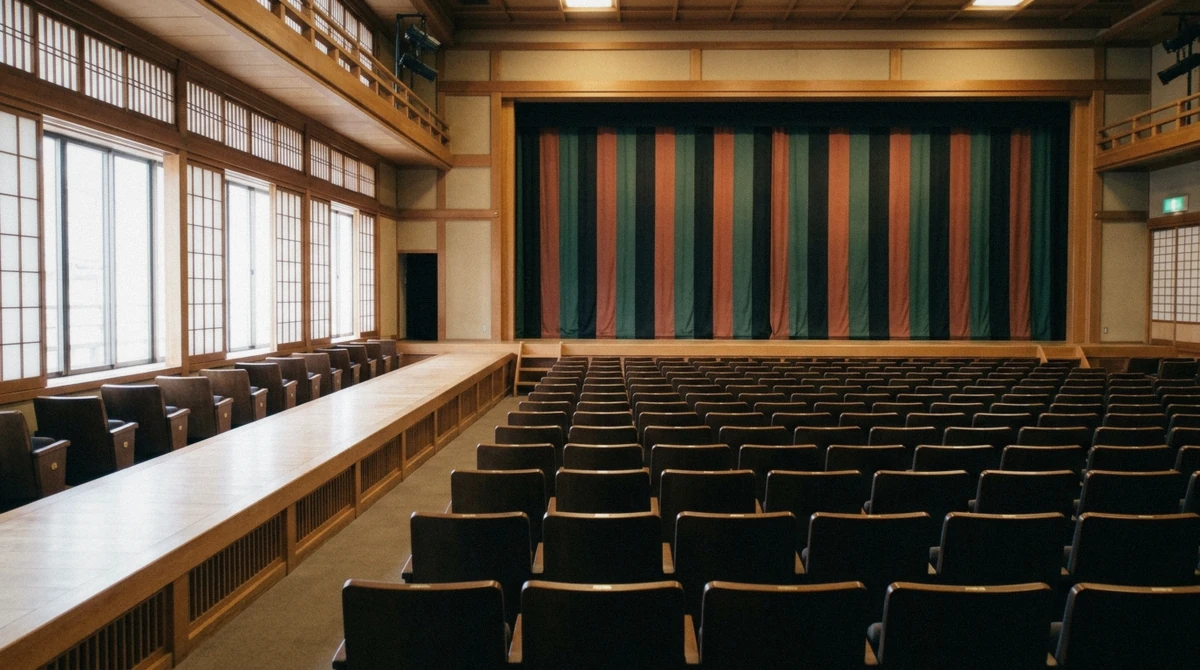
Each hanamachi stages its own annual public dance at its own kaburenjo (theatre), and this is where geiko and maiko districts genuinely perform in full, not in a fragment. Kitano Odori opens the calendar in Kamishichiken, followed by Miyako Odori, Gion Kobu's 152nd staging in 2026 and the largest of the four, then Kyo Odori in Miyagawacho and Kamogawa Odori in Pontocho closing the spring run in May. Gion Odori, Gion Higashi's dance, is the exception: it runs in autumn, in early November, and its exact dates are published each year rather than fixed on the calendar.
Each performance runs about one hour, with two or three showings a day depending on the theatre.
| Dance | District | 2026 season | Times | Tickets |
|---|---|---|---|---|
| Kitano Odori | Kamishichiken | March 20 to April 2 | 14:00, 16:30 | ¥6,000 (~$38); ¥7,000 (~$44) with tea |
| Miyako Odori | Gion Kobu | April 1 to 30 | 12:30, 14:30, 16:30 | ¥4,000 second class (~$25) to ¥7,000 first class with tea (~$44); ¥2,000 student (~$13) |
| Kyo Odori | Miyagawacho | April 4 to 19 (closed April 13) | 13:00, 16:00 | ¥6,000 mezzanine with tea (~$38); ¥7,000 first floor with tea (~$44) |
| Kamogawa Odori | Pontocho | May 5 to 22 | 12:30, 14:20, 16:10 | ¥4,000 (~$25) to ¥7,000 premium with tea (~$44) |
Buy tickets through each kaburenjo's own site or its usual box-office channels; a general Kyoto tourism kiosk can point you to the right window but the theatres sell directly. These are the 2026 season's confirmed dates; next year's are published by each kaburenjo the winter before, so confirm on the theatre's own site before you plan around them. Miyako Odori's own listing is a reliable place to check current-year dates. Last verified: August 2026.
Gion Corner, the Everyday Option
Gion Corner, at Yasaka Hall, is the one show on this list that runs nearly every night of the year with no advance booking strictly required. Shows run at 18:00 and 19:00, about 50 minutes each. Adult admission is ¥5,500 (~$35); age 16 to 22 is ¥3,850 (~$24); age 7 to 15 is ¥3,300 (~$21); age 0 to 6 is free; a seat with Japanese tea and sweets is ¥6,050 (~$38), and a premium seat is ¥6,600 (~$42).
Winter season, December 1 to March 11, runs Tuesday to Friday only, excluding public holidays, and the venue closes entirely on July 16, August 16, and December 26 through January 4. It sits five minutes' walk from Gion-Shijo station on the Keihan line.
- Kyomai dance, one segment of which features a maiko
- Tea ceremony demonstration
- Koto music
- Flower arrangement (ikebana)
- Gagaku court music
- Kyogen comic theatre
- Bunraku puppet theatre or noh, depending on the month
Be honest with yourself about what this is: a sampler of seven traditional arts, of which the maiko dance is one short segment among seven, not a dedicated geiko performance and nothing like a private ozashiki banquet. It is the right call if your evening is flexible and you want a broad introduction to Kyoto's performing arts in under an hour; it is the wrong call if seeing a maiko specifically, and for more than a few minutes, is the actual point of your evening. Check current details on the venue's own site.
Last verified: August 2026.
Public Festivals Through the Year
A handful of festivals bring geiko and maiko into public view outdoors, on fixed annual dates, free or close to it.
- Baikasai, February 25, Kitano Tenmangu: geiko and maiko of Kamishichiken serve tea outdoors in the plum grove, marking the anniversary of Sugawara no Michizane's death. Garden entry is ¥1,200 (~$8); the tea ticket (haifukuken) is ¥3,000 (~$19) and includes the tea service, the treasure hall and a souvenir
- Setsubun, early February around the 2nd and 3rd: dance and bean-throwing appearances at Yasaka Shrine and Kitano Tenmangu, with exact times announced by each shrine every year
- Hassaku, August 1: a formal greeting round in Gion Kobu, where maiko and geiko in black crested kimono visit their teachers and teahouses. It is a working morning watched from a respectful distance, not a photo opportunity
- Shigyoshiki, early January: the districts' own start-of-year ceremony, another working occasion rather than a staged show for visitors
These are the moments where the community is genuinely public and unticketed, and they reward planning a trip around the calendar rather than hoping for a lucky street sighting. Last verified: August 2026.
Walking the Districts Respectfully
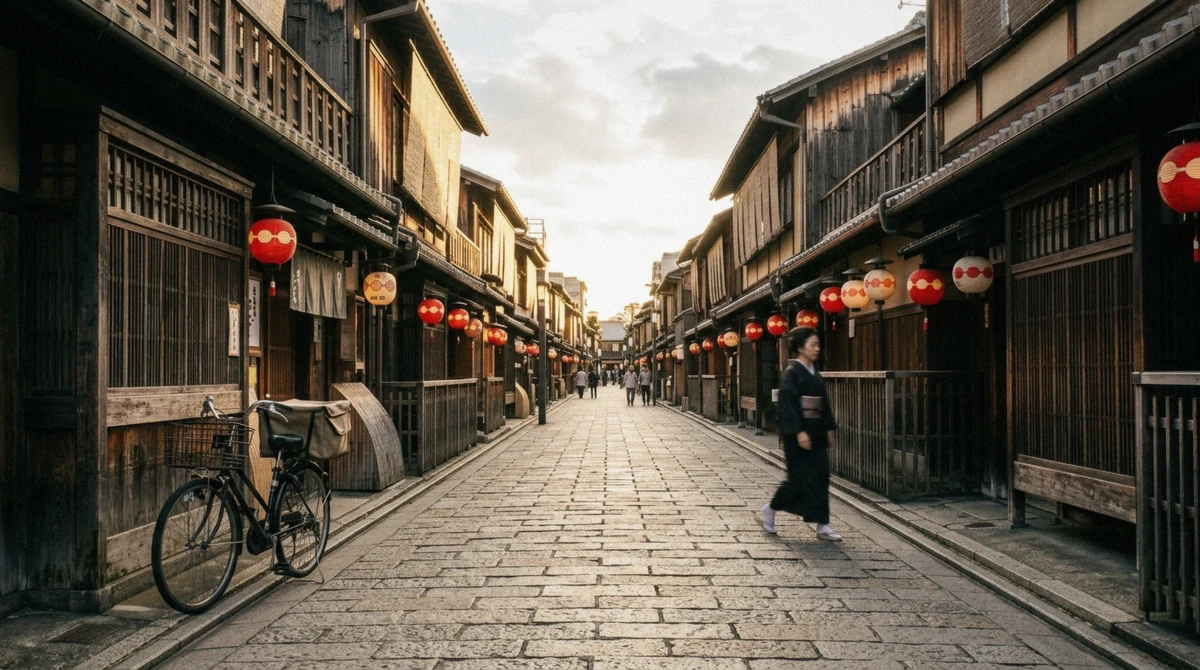
You may simply see a geiko or maiko while walking a public street, most often around dusk, roughly 17:30 to 18:30, and again later, around 21:30 to 22:00, when evening appointments end. Hanamikoji-dori between Shijo-dori and Kennin-ji, and the Shijo end of Pontocho, are the two stretches where this happens most, and Mondays tend to be quieter than the rest of the week. This is not something to plan a strategy around; it is what you may happen to see while walking a public street for an entirely different reason, and treating it as a hunt, following someone or crowding a narrow lane for a photo, is exactly the behaviour that led to the restrictions covered in full in our Gion photography rules guide: the small private lanes off Hanamikoji are closed to visitors entirely, with a posted charge of up to ¥10,000 for entering or photographing there.
One honest tell worth knowing: many women you see in full costume in daylight around Kiyomizu-dera are visitors in a paid henshin dress-up session, not working geiko or maiko. Daytime, a camera-ready pose, and a friend photographing them are the giveaways. A real geiko or maiko is moving with purpose toward an appointment, not posing for you, and dusk rather than midday is when you are actually likely to see one.
Last verified: August 2026.
Which Option Fits You?
If you're in Kyoto in April
Buy a ticket to Miyako Odori or Kyo Odori; this is the single best month on the calendar, with two of the four spring dances running at once.
If you're in Kyoto in February
Plan around Baikasai on February 25 at Kitano Tenmangu, and check Setsubun dates at Yasaka Shrine for the same week.
If you have one evening only and no odori is running
Gion Corner is the reliable fallback, no booking required, though remember it's a seven-art sampler and not a dedicated maiko show.
If you're traveling with children
Gion Corner's shorter format and fixed nightly schedule suit a family evening better than an open-ended walk hoping for a street sighting.
If you actually want to talk with a maiko, not just watch one
None of the DIY options get you there; book meeting a maiko or a similar arranged experience instead.
Map of the Districts and Theatres
The five kaburenjo theatres, one per hanamachi, plus Gion Corner and Kitano Tenmangu, the festival venue across the city. Theatres are marked separately from the two everyday and festival venues in the legend.
Where a Booked Evening Earns Its Price
The honest gap between DIY and a booking comes down to depth and certainty. A booked evening turns a maybe into a definite: instead of walking Hanamikoji hoping for a passing glimpse, you get a scheduled show, a guided context for what you're seeing, or an actual conversation. The after-dark Gion walking tour, from $28, adds a knowledgeable guide to the same streets covered in the section above, turning a hopeful walk into a structured one with real context on the districts and their history. Meeting a maiko, from $48, is the option that closes the one gap nothing on the DIY list can touch: a maiko speaking with you directly, in a short, arranged setting, rather than performing on a stage or being glimpsed on a street.
The Gion dinner show sits between the two, combining a district walk with a performance and a meal in one booked evening.
- Certainty: a booking guarantees a sighting or an interaction; every DIY street-walk option here does not
- Depth: a scheduled conversation or Q&A goes further than a stage performance viewed from a theatre seat
- Context: a guide explains what you're looking at on the walk, rather than leaving you to work it out from a guidebook
For the full price comparison across every booked format on this site, see our complete cost breakdown. None of this makes the free options a lesser choice; if your dates land inside an odori season, that ticket alone may be the best evening on this whole list. The honest answer is simply that DIY and a booking solve different problems, and knowing which problem you actually have is most of the decision.
Frequently Asked Questions
Can you see a maiko in Kyoto without spending any money?
Partly. Walking the districts at dusk, roughly 17:30 to 18:30 on Hanamikoji-dori, costs nothing but offers no guarantee. Setsubun appearances at Yasaka Shrine are typically free to watch as well. Every other option on this page, from the odori dances to Gion Corner, carries a ticket price.
Is Gion Corner worth it if I only have one night in Kyoto?
Yes, as a broad introduction rather than a dedicated maiko show. It runs nightly with no booking needed, but remember the maiko dance is one of seven segments in about 50 minutes, so treat it as a sampler, not the deep experience a booked evening offers.
How do you get tickets to the Miyako Odori or the other spring dances?
Directly through each kaburenjo's own site or box office; Kyoto Kobu's Miyako Odori, Kamishichiken's Kitano Odori, Miyagawacho's Kyo Odori and Pontocho's Kamogawa Odori each sell their own tickets, and dates and prices are confirmed on the theatre's site each season.
What time of day do maiko walk through Gion?
Most often around dusk, roughly 17:30 to 18:30, as evening appointments begin, and again later, around 21:30 to 22:00, as they end. Mondays tend to be quieter than the rest of the week for this kind of chance sighting.
Does walking around Gion actually guarantee you'll see a geiko or maiko?
No, and treating it as a guarantee sets up a disappointing evening. It is a real possibility during the dusk window on streets like Hanamikoji, not a scheduled event; the odori dances and Gion Corner are the options that guarantee a sighting.
Can you talk to a maiko without booking anything?
No. A stage performance or a passing glimpse on the street does not involve conversation. A real exchange with a maiko happens only inside an arranged, consented setting such as meeting a maiko, which is the one gap DIY genuinely cannot close.
Are the tourists in costume near Kiyomizu-dera actually geiko or maiko?
Usually not. Most women in full costume in daylight around Kiyomizu-dera are visitors in a paid henshin dress-up session. Daytime, a posed stance and a friend taking photos are the giveaways; a working geiko or maiko is typically seen at dusk, moving with purpose.