What Happens to Geishas When They Get Old?
Geisha do not retire at a set age: in Kyoto a geiko can keep working into her eighties or nineties, and the ones who stop usually become the women who run the houses or leave the district quietly. If you have wondered what happens to geishas when they get old, the short version is that the profession is built for a long career, with a different role at each stage of life. Below are the ages involved, the jobs older and retired geiko take, how a retirement is marked and why the district worries about its middle generation, ending with the realistic way to meet working maiko at a geisha show in Kyoto.
Quick answer
Geisha keep working as long as they choose, into their eighties or nineties, and those who stop often run an okiya or teahouse, teach or open a business, since marriage and retirement go together in Kyoto.
Key takeaways
- There is no retirement age: Wikipedia reports geisha can and do work into their eighties and nineties, and a maiko told All About Japan they can work to 90 if they do not marry
- After the Second World War many geisha retired in their mid-twenties on a patron's support, a custom that has largely faded
- Retired geisha may become the mother of an okiya, teach, perform or leave the district, as one former Gion geiko did to run a bar
- Kyoto had about 161 geiko and 68 maiko in 2021, so the working generation is small and every senior geiko matters
- To see a maiko in her prime, a one-hour show with a Q&A puts her in the room, and the private hour lets you ask about her future
Where can you ask a maiko what she wants to do next?
A show with an interpreter gives you time to ask about training, daily life and the future. The one-hour show includes a live Q&A, and the private hour is the quietest setting.
 from $81
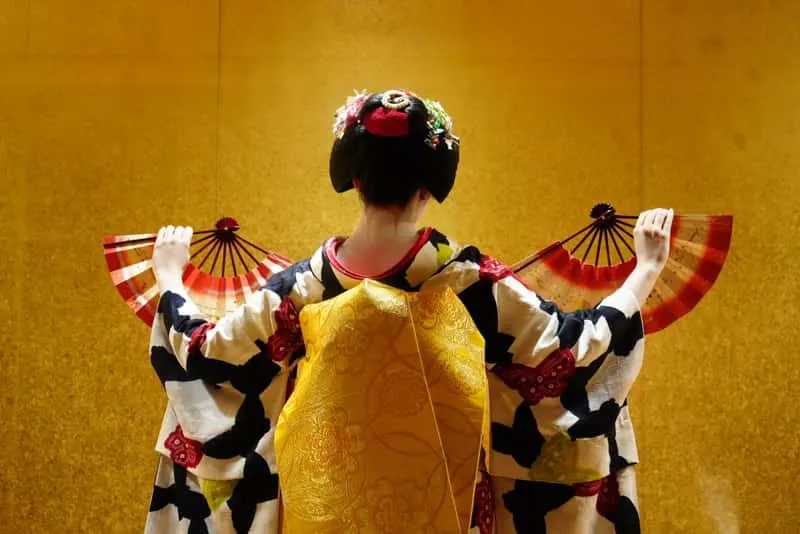
Authentic One-Hour Kyoto Geisha Show with Live Q&A and Photos
A focused one-hour geisha show in Kyoto featuring a live dance performance, an interactive Q&A, and a photo session with the performer. A quick, authentic way to see…
- Live geisha dance performance
- Interactive question-and-answer session
- Photos with the geisha included
- Near Kitano Tenmangu Shrine — easy to combine
 from $48
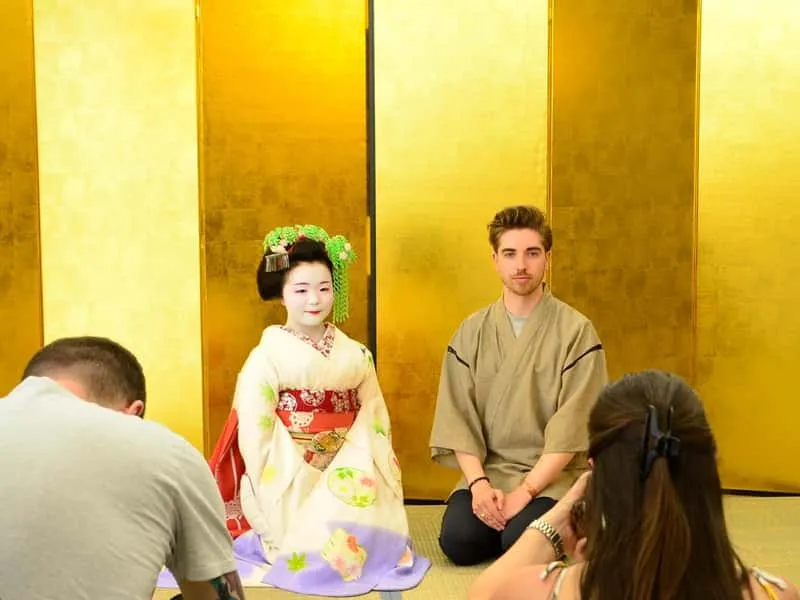
Meet a Real Kyoto Maiko — Intimate Show, Stories & Keepsake Photo
An affordable meet-and-greet with a Kyoto maiko, including a short dance, a friendly chat about apprentice life, and a keepsake photo. The most budget-friendly way to meet a…
- Meet and greet a real Kyoto maiko
- Short traditional dance performance
- Learn about apprentice geisha life
- Keepsake photo included — best value option
 from $720 / group
Private Hour with a Kyoto Apprentice Maiko — Dance, Tea & Photos
A private geisha show in Kyoto built around one apprentice maiko, with a traditional dance, a relaxed Q&A, and time for photos in full kimono. Exclusive booking for…
- Private group booking — the room is yours alone
- Traditional dance performed by an apprentice maiko
- Casual Q&A to learn about the world of the geisha
- Photos with the maiko in full kimono
What happens to geishas when they get old?
Most keep working, and the rest move into the roles around the profession. Wikipedia says geisha can keep working into their eighties and nineties and are still expected to train, though lessons may be only a few times a month. Retired geisha may leave the karyukai, the flower and willow world, become the mother of an okiya, or focus on performing and teaching.
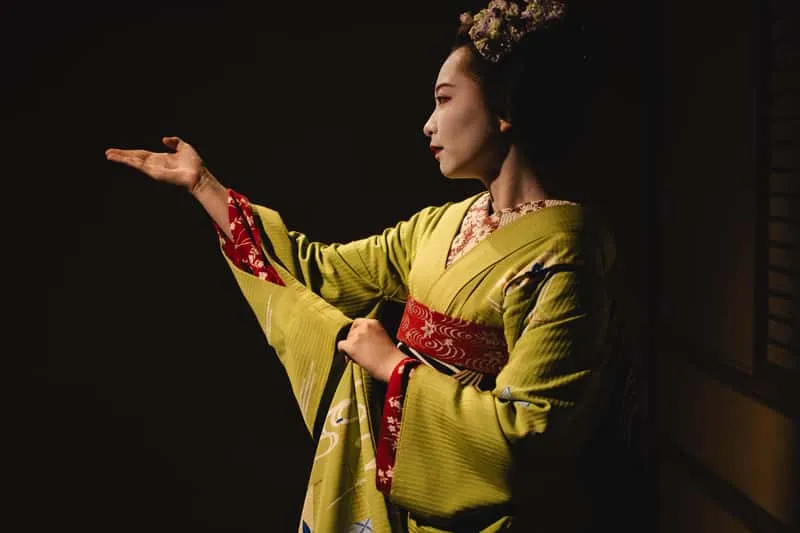
The same word covers very different lives. A geiko in her sixties and a maiko of seventeen share a district but not a job: the maiko is an apprentice who dances, the older geiko is a respected artist who may sing and play shamisen while the younger woman dances. A guest at a dinner described exactly that scene, with an older geisha in a subdued kimono playing and singing while a young maiko danced.
The age at which a woman stops is a personal decision, and it is tied to money, health and, in Kyoto, to marriage. For that last point see why geishas cannot marry.
Is there a retirement age for geisha?
No. All About Japan reports that the only requirement for keeping the title is not marrying and that there is no mandated retirement, and the maiko the writer interviewed said a geisha can work to 90. In practice, the stage of life sets the role.
This table shows the stages of a geisha's working life by age, using the Gion Kagai Art Museum, Wikipedia and All About Japan.
| Stage | Typical age or length | What she does |
|---|---|---|
| Entry and training | Often from junior high school graduation | Lives in an okiya, does chores and trains in dance and etiquette |
| Maiko | 3 to 5 years, debut usually 17 to 18 | Dances and attends banquets in the long-sleeved kimono |
| Erikae, becoming a geiko | About 20 to 21 | Changes collar, wears a wig and a more mature look |
| Master dancer track | 10 to 20 more years | Can be recognised as a master and take the Inoue name |
| Senior geiko | Into the 70s, 80s or 90s | Performs, teaches and trains younger women |
The museum describes the stages and Wikipedia gives the usual age at debut.
Source: Gion Kagai Art Museum, Wikipedia, All About Japan.
Do older geisha still perform?
Yes. A Kyoto Journal field report says some geiko in their 70s, 80s and even 90s still work, and compares senior geiko to old-growth trees that play a key role in the ecosystem. The same report says senior geiko are essential for developing the nuanced artistry of authentic geiko, since a young woman learns the manner from watching them.
Roles also divide by skill. Tachikata dance and jikata play shamisen and sing seated, according to the Gion Kagai Art Museum. Experience matters most in the seated music, and the Kyoto Journal says the district worries about having enough skilled jikata for its dancers.
At the district's biggest event, the Miyako Odori in April, around 60 performers take part and all 79 Gion Kobu geiko and maiko train at the Gion Women's Arts School. Mameki, a geiko, told Premium Japan that when you become a geisha you feel a pressure to be a role model for the younger generation, which describes the senior role well.
Source: Kyoto Journal, Gion Kagai Art Museum, Premium Japan.
What jobs do retired geisha take?
Three paths are common, and the table lists them with a source for each. Wikipedia notes that okiya are usually run by women, many of them former geisha, and the okiya's mother trains apprentices and arranges engagements. Kyoto Journal separates the okasan, the mother of an okiya who curates costume, from the okamisan, the mistress of an ochaya who organises seasonal banquets with local suppliers.
This table lists the paths open to a geisha who stops performing, with the source for each.
| Path | What it involves | Source |
|---|---|---|
| Mother of an okiya (okasan) | Trains apprentices, curates costume and arranges engagements | Wikipedia, Kyoto Journal |
| Mistress of a teahouse (okamisan) | Runs the ochaya, knows who makes the best tea and sake | Kyoto Journal |
| Performer and teacher | Keeps performing and teaching | Wikipedia |
| New business | Former Gion geiko Yoshida Teruko, 53 at the time of her interview, runs a bar in Gion | Kyoto Journal |
| Family life | Some maiko leave for family or other careers after demanding training | Kyoto Journal |
Yoshida Teruko told Kyoto Journal that she no longer teaches dance to young maiko the way an okiya mother might, but they still come to her to learn how Gion works. Her own mother, 83 at the time of the interview, was still the mother of a teahouse.
Source: Wikipedia, Kyoto Journal 2018, Kyoto Journal 2011.
How does a geisha retire?
She marks it with gifts and farewell visits. The Yumeyakata guide to Kyoto's flower towns explains the custom of hiki-iwai: the retiring maiko or geiko gives small gifts to customers, teachers and colleagues, each with a paper triangle printed with her real name and stage name, and calls on the teahouses, her teachers and the district office in a plain single-crest kimono and ordinary makeup.
The gift is a message. Traditionally it was boiled rice, white rice meaning she would not return to the district and red sekihan meaning she might. Today a packet of sugar or a handkerchief is more usual.
The guide says retiring means becoming a towner, someone no longer a professional, and advises a retired geiko to stay close to her older sister geiko for life.
This table explains the hiki-iwai custom, using the Yumeyakata guide to Kyoto's flower towns.
| Element | Traditional | Today |
|---|---|---|
| Gift | Boiled rice | Sugar or a handkerchief |
| White rice | She will not return | Not applicable |
| Red sekihan | She may return | Not applicable |
| Farewell dress | Plain kimono with one crest and ordinary makeup | The same |
Source: Yumeyakata.
Why are there so few geiko in their fifties and sixties?
Kyoto Journal says the group in their 50s and 60s is small. The post-war decline in numbers explains part of it. Wikipedia records that Kyoto's geisha fell from 548 in 1965 to 202 in 2006, and National Geographic cites about 161 geiko and 68 maiko across the five districts in 2021, based on an Asahi report.
The economics matter too. The Kyoto Journal says patron subsidies are a thing of the past and that independent geiko living in nearby apartments face rising costs from gentrification and short-term rentals. Fumie Komai, who runs the Komaya okiya, is quoted saying of maiko who leave for family life or other careers, "You can't stop them leaving." Her answer is to present geiko work as a lifetime career with specialised music training.
Source: Kyoto Journal, Wikipedia, National Geographic.
How does a geisha's look change as she gets older?
The dress shows the stage. According to the Gion Kagai Art Museum, a maiko's hairpins change every month with the season, and after three or four years they turn more sober in colour. At erikae she changes to a white collar and a shimada-style wig.
The maiko's dangling obi, 5.4 metres long and weighing 6 kilograms, belongs to the apprentice stage.
So a visitor can read the room by the clothes: the bright hairpins belong to the apprentice and the white collar and wig to the geiko. The page on geiko versus maiko lists every difference.
Source: Gion Kagai Art Museum.
How old can you be to become a geisha?
Training starts young. The Gion Kagai Art Museum says girls may move into an okiya right after junior high school, and National Geographic says maiko are generally between fifteen and twenty years old and that becoming a geisha takes nearly a decade, with a probationary period, an apprenticeship and further training. All About Japan adds that most modern maiko choose the path themselves.
That long road is one reason the older generation matters so much. A woman who joined at fifteen has a working life of many decades behind her by the time she is a senior geiko, and nobody can replace that overnight.
Who looks after a geisha when she is old?
Her house and her network do. After the Second World War many geisha retired in their mid-twenties to live on a patron's support, according to Wikipedia, and the same article records that by 1975 geisha in Pontocho averaged about 39 years old, with most aged 35 to 49. The patron system has weakened since, and Kyoto Journal says patron subsidies are a thing of the past.
What replaced them is the district itself. Senior and retired geiko need to be able to live within the kagai, the Kyoto Journal says, so they keep giving formal and informal input on training. The ties between older and younger sisters, and between a retired geiko and her okiya, carry the role that a pension would in other jobs.
Source: Wikipedia, Kyoto Journal.
What is the realistic way to meet working maiko?
Book a show and ask her. The meet-a-maiko show is 45 minutes with a dance, stories and a photo, the one-hour show with a Q&A leaves time for questions and the private hour is the quietest. Ask about training and daily life, and accept a short answer if you ask about the future.
To understand who you are watching, geiko versus maiko explains the dress and the stages, and do geisha girls still exist today covers the numbers. You can compare every format on the Geisha Show Kyoto homepage.
Frequently Asked Questions
How old can a geisha be?
There is no limit. Wikipedia reports that geisha can and do work into their eighties and nineties.
At what age do geisha retire?
No set age. After the Second World War many retired in their mid-twenties, but today the choice is personal and often tied to marriage.
What do retired geisha do?
Some become the mother of an okiya or the mistress of a teahouse, some teach or perform and some leave to run a business, as the former Gion geiko Yoshida Teruko did with a bar.
Do geisha get a pension?
Not from the profession itself. Kyoto Journal says patron subsidies are a thing of the past, and support comes from the okiya and the district.
Can a geisha marry and keep working?
In Kyoto marriage ends the career, while elsewhere in Japan some marry and continue. The full answer is in why geishas cannot marry.
Can I meet an older geiko?
Seldom at a tourist show, where a maiko usually performs. A private hour with a maiko lets you ask how she sees her future.