Do Geisha Girls Still Exist Today?

Yes, geisha still exist today, and in Kyoto they are called geiko: about 161 geiko and 68 apprentice maiko worked across the city's five districts in 2021, and all 79 geiko and maiko of the largest district, Gion Kobu, were enrolled at its arts school in 2025. People who ask whether geisha girls still exist are usually asking how many are left, whether the work is legal and why they almost never see one. This page gives the counts from 1965 to today, the legal answer, the reasons a sighting is rare and the realistic way to meet a maiko through a booked Kyoto geisha show.
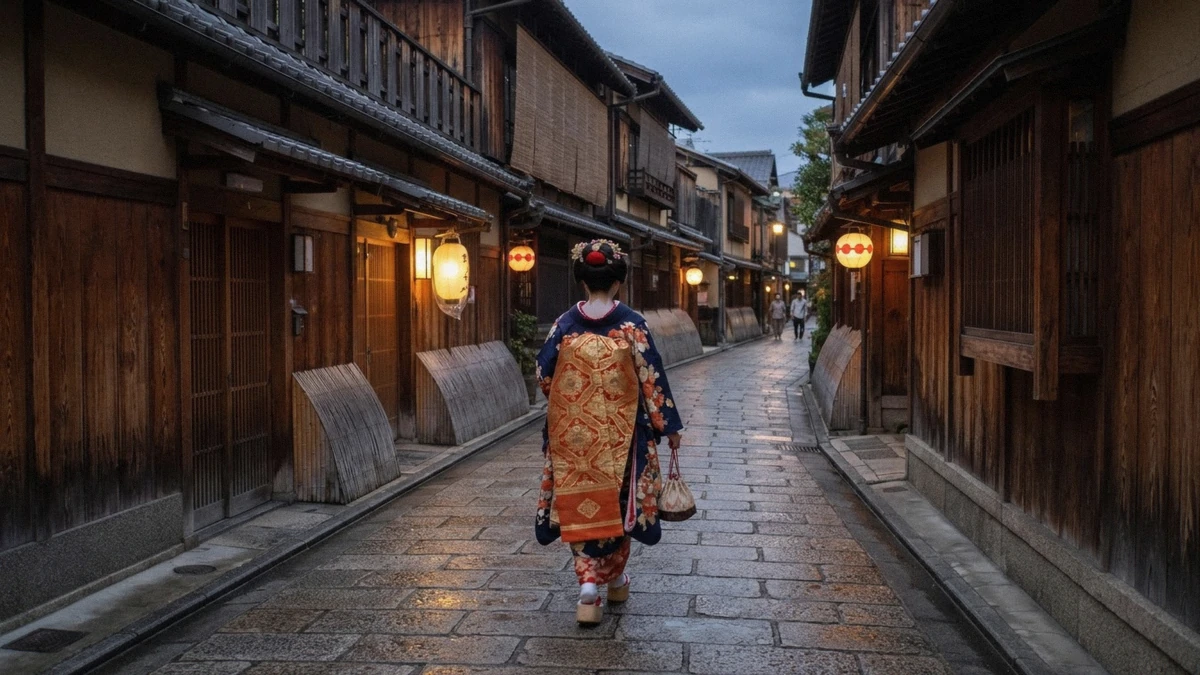
Quick answer
Yes, geisha still exist: roughly 161 geiko and 68 maiko worked in Kyoto's five districts in 2021, down from 548 geisha in 1965, and they are working artists and not a relic.
Key takeaways
- Kyoto's five districts held about 161 geiko and 68 maiko in 2021, from an Asahi Shimbun report quoted by National Geographic
- The count of Kyoto geisha fell from 548 in 1965 to 202 in 2006, so the decline is real but the profession has stabilised
- Geisha are legal, trained performers and are separate from the sex trade, which Japan's 1958 law outlawed
- About 15,000 sightseers walk Hanamikoji each day, so seeing a maiko by chance is rare, a booked show is not
- Gion Kobu's Miyako Odori runs 1 to 30 April 2027, and tickets go on sale 6 January 2027 at 10:00
- Read how maiko differ from geiko in geiko versus maiko
Where can you meet a maiko today?
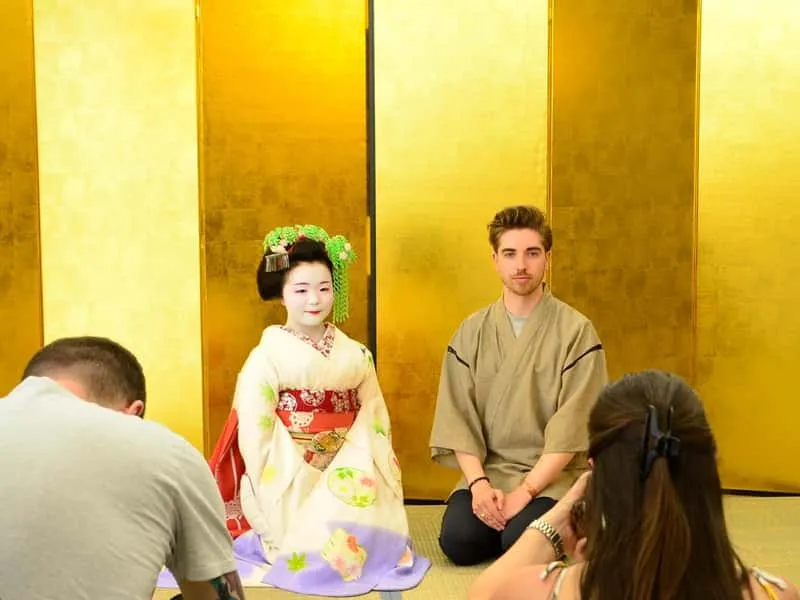
The three shows below put a working maiko in front of you with an interpreter. The 45-minute meet-and-greet is the shortest and the one-hour show adds a Q&A and photos.
 from $48
Meet a Real Kyoto Maiko — Intimate Show, Stories & Keepsake Photo
An affordable meet-and-greet with a Kyoto maiko, including a short dance, a friendly chat about apprentice life, and a keepsake photo. The most budget-friendly way to meet a…
- Meet and greet a real Kyoto maiko
- Short traditional dance performance
- Learn about apprentice geisha life
- Keepsake photo included — best value option
 from $81
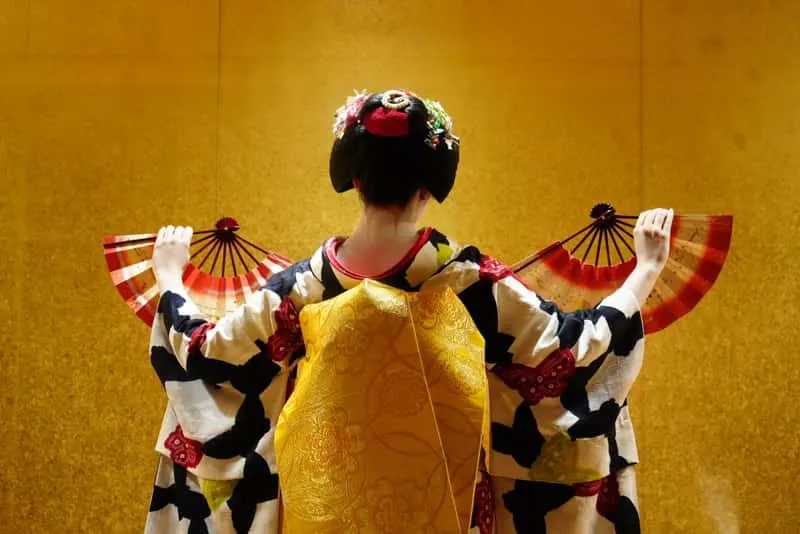
Authentic One-Hour Kyoto Geisha Show with Live Q&A and Photos
A focused one-hour geisha show in Kyoto featuring a live dance performance, an interactive Q&A, and a photo session with the performer. A quick, authentic way to see…
- Live geisha dance performance
- Interactive question-and-answer session
- Photos with the geisha included
- Near Kitano Tenmangu Shrine — easy to combine
 from $720 / group
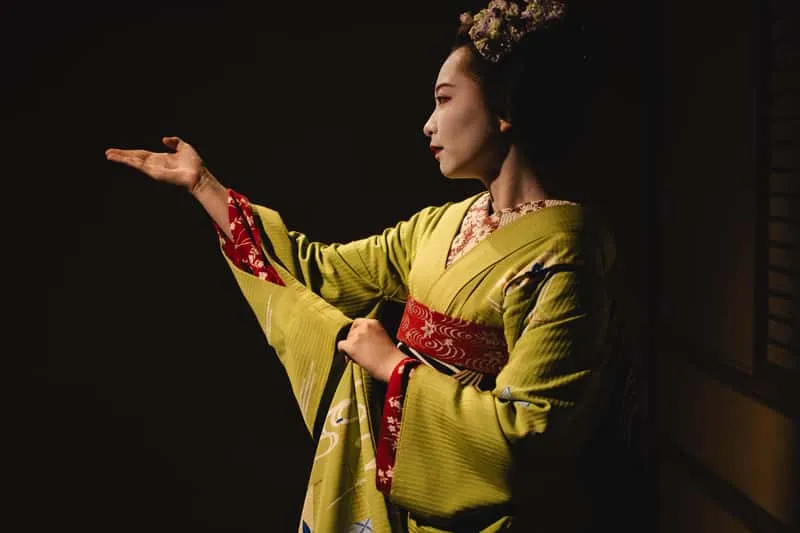
Private Hour with a Kyoto Apprentice Maiko — Dance, Tea & Photos
A private geisha show in Kyoto built around one apprentice maiko, with a traditional dance, a relaxed Q&A, and time for photos in full kimono. Exclusive booking for…
- Private group booking — the room is yours alone
- Traditional dance performed by an apprentice maiko
- Casual Q&A to learn about the world of the geisha
- Photos with the maiko in full kimono
Do geisha girls still exist today?
Yes. Kyoto still has five working geisha districts, called hanamachi, and the women in them are trained performers of dance, shamisen and conversation. The old word geisha means person of the arts, and in Kyoto the fully trained woman is called a geiko while the apprentice is a maiko.
The profession is smaller than it was a century ago, but it has not died out. The first geisha were in fact men, as were geisha girls originally men explains.
Geisha also work outside Kyoto. National Geographic profiles working geisha in Kanazawa, and a Tokyo photographer's interview records geisha of the Omori Kaigan district, so the tradition is not confined to Gion. Kyoto remains the main centre, with the districts of Gion Kobu, Gion Higashi, Pontocho, Miyagawacho and Kamishichiken.
Source: National Geographic, Laura Wheatley.
How many geisha are left in Kyoto?
The most recent count for the whole city is from 2021: about 161 geiko and 68 maiko, an Asahi Shimbun figure cited by National Geographic. The largest district, Gion Kobu, had 79 geiko and maiko in 2025. The numbers are small enough that each year's intake matters.
This table follows Kyoto's geisha and maiko counts from 1965 to 2025. Figures for 1965 and 2006 come from the anthropologist Liza Dalby as summarised on Wikipedia, 2021 from National Geographic quoting the Asahi Shimbun, and 2025 from Premium Japan.
| Year | Geisha (geiko) | Maiko | Scope |
|---|---|---|---|
| 1965 | 548 | 76 | Kyoto |
| 2006 | 202 | 71 | Kyoto |
| 2021 | about 161 | about 68 | Five Kyoto districts |
| 2025 | 79 in total | (included) | Gion Kobu only |
Geisha numbers before the Second World War had been as high as 80,000 across Japan, according to Dalby. The drop to a few hundred came with changed entertainment habits, the cost of a geisha's training and the end of the patron system. The pandemic lowered the 2021 numbers, National Geographic notes, and interest in joining has levelled off.
Source: Wikipedia, National Geographic, Premium Japan.
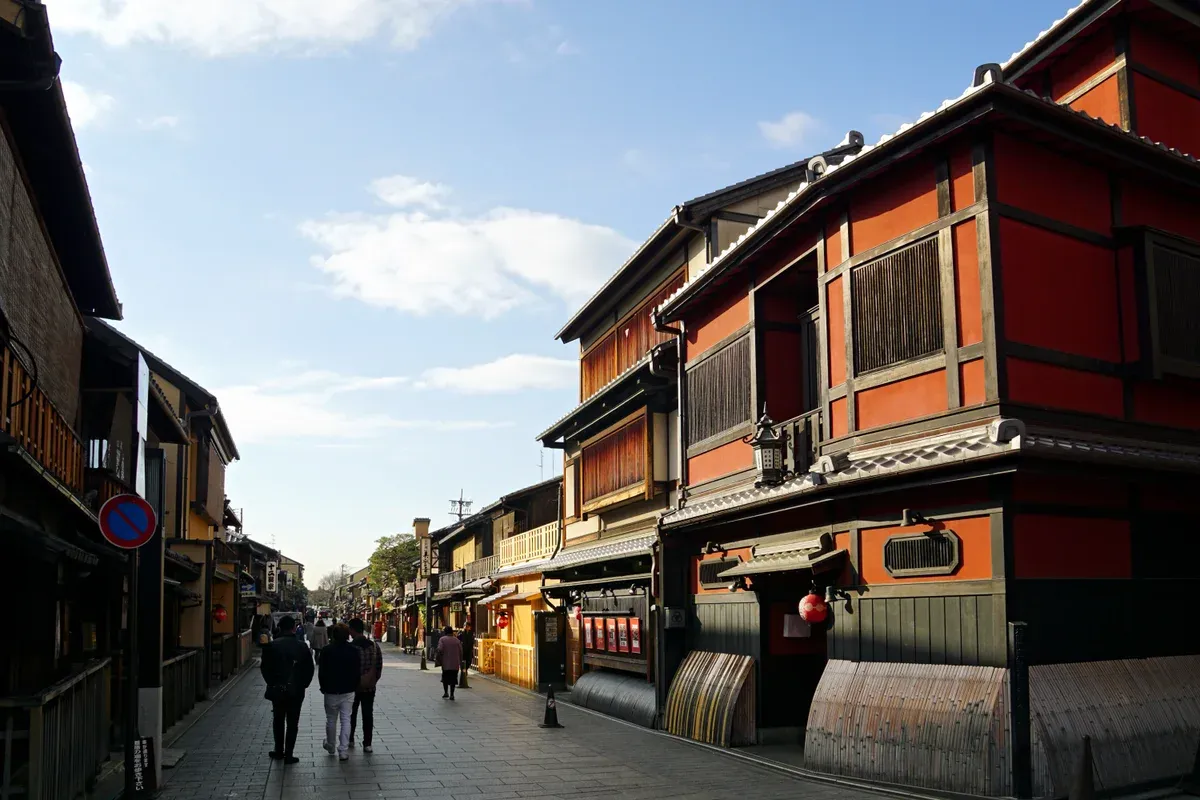
Hanamikoji Street in Gion. Photo: 663highland, CC BY 2.5, via Wikimedia Commons
Are geishas still legal in Japan?
Yes. Being a geisha is a legal profession, and a modern geisha registers with an okiya, the house that trains and houses her. The confusion comes from history.
In 1872 the Meiji government freed prostitutes and geisha together but kept an official distinction between the two, and the Prostitution Prevention Law, passed in 1956 and fully in force from April 1958, criminalised most prostitution.
Geisha were never part of that trade. Maikoya, a Kyoto operator, points out that earlier laws stated exactly what a geisha and what a courtesan could do, and that geisha could lose their licence to entertain for any involvement in sex work. The obi knot tied at the back, not at the front, became one of the visible signs of that line.
For the difference between a maiko and a geiko, see geiko versus maiko.
Why is it so rare to see a geisha?
It is rare because there are very few of them and almost all their work happens behind closed doors. Gion Kagai Art Museum counts about 15,000 sightseers on Hanamikoji each day. Set against roughly 229 geiko and maiko in all five districts in 2021, that is about 65 sightseers on that one street for every working geiko or maiko in the whole city.
Most of a geiko's evening happens inside an ochaya, a tea house, at a private banquet. A maiko on the street is usually hurrying to one, and Kyoto Tourism says she is typically in a hurry, so stopping her disrupts a working appointment. The best-known street hours are around dusk, roughly 17:30 to 18:30, and later when appointments end.
Photographing or following a performer is where many visitors go wrong. The residents' notice on the Kyoto Tourism site states that geiko and maiko are not mascot characters, and it lists photography in restricted areas, stopping them and touching them among prohibited acts. The Gion photography rules explain the lanes where a camera is banned.
The honest answer is that a sighting is luck and a show is a plan.
Source: Gion Kagai Art Museum, Kyoto Tourism.
Do tea houses still exist in Japan?
Yes. An ochaya, or tea house, is the house where geisha entertain, and Kyoto's districts still have working ones. The Gion Kagai Art Museum describes them as organisers that arrange the party room, food, transport and tickets and pay the expenses in advance, which is why entry requires an invitation from a trusted customer.
That is the rule called ichigensan okotowari, no first-time guests. It is why a visitor cannot book a banquet at a Gion ochaya directly. Tea house shows that a tour operator runs for visitors are adapted from that format, and are Kyoto geisha shows authentic explains what is real and what is staged in them.
Source: Gion Kagai Art Museum.
How does someone become a geisha today?
Training follows a fixed path that begins in the mid-teens. According to the Gion Kagai Art Museum, girls often start living in an okiya right after junior high school. After about a year, with the dance instructor's permission, they become pre-apprentice interns, and the debut as a maiko, called omisedashi, follows about a month later.
This table lays out the standard stages as the Gion Kagai Art Museum and Wikipedia describe them.
| Stage | Length | What happens |
|---|---|---|
| Shikomi (trainee) | Often up to one year | Household work and lessons in the okiya |
| Minarai (pre-apprentice) | About one month | Observes banquets before the debut |
| Maiko (apprentice) | 3 to 5 years | Dances, plays and serves at banquets, with her own hair and long sleeves |
| Erikae, becoming a geiko | About age 20 to 21 | The collar changes and she is a fully trained geiko |
Debut is usually around age 17 or 18 today, Wikipedia says. The okiya covers training, kimono and housing, which is why the profession is closer to an apprenticeship than a job.
Source: Gion Kagai Art Museum, Wikipedia.
What does a working maiko still wear and carry?
The costume is part of the training and has not been simplified for visitors. The Gion Kagai Art Museum describes maiko practising the white make-up about 10 days before they become interns, and adding colour to the upper lip about a year after their debut. The hanging obi measures 5.4 metres and weighs 6 kilograms, and the okobo clogs are more than 10 centimetres tall.
This table lists the details the Gion Kagai Art Museum gives for a maiko's kit and how they change when she becomes a geiko.
| Item | Maiko | Detail from the museum |
|---|---|---|
| Obi | Long, hanging at the back | 5.4 m long, weighs 6 kg |
| Footwear | Okobo clogs | More than 10 cm tall |
| Make-up | White powder, lip colour added in stages | Practice starts about 10 days before the intern stage, upper lip coloured about a year after debut |
| Debut fan | Three red lines | A geiko's fan has five purple lines |
These details are the quickest way to tell a working maiko from a visitor in a rental kimono, a point covered in is it okay to wear a kimono if you're not Japanese. Accredited masters, usually after 10 to 20 years, receive another fan.
Source: Gion Kagai Art Museum.
How old can a geisha be?
There is no official retirement age. Wikipedia reports that geisha can and do work into their eighties and nineties, and a writer interviewing a maiko for All About Japan was told a geisha can work to 90 as long as she does not marry. After the Second World War, many geisha retired in their mid-twenties to live on a patron's support.
That custom is much less common now. What happens to a geiko later in life has its own page, see what happens to geishas when they get old.
Source: Wikipedia, All About Japan.
What is changing for geisha in Kyoto now?
The district is becoming more visible and more protected at the same time. The Gion Kagai Art Museum opened in May 2024, and 2024 also marked the 150th Miyako Odori, first performed at the 1872 Kyoto Exhibition. Residents have introduced rules on private lanes and in the street, and the Gion photography rules cover what visitors may and may not do.
This table lists the main public stage dates for 2027 that a visitor can plan around.
| Event | Dates | Notes |
|---|---|---|
| Miyako Odori, Gion Kobu | 1 to 30 April 2027 | Tickets from 6 January 2027, 10:00, 5,000 to 8,000 yen, 3,000 yen for students |
| Gion Corner winter schedule | 1 December 2026 to 11 March 2027 | Tuesday to Friday at 18:00 and 19:00, closed 26 December to 4 January and on 11 and 23 February |
| Setsubun, Kitano Tenmangu | 3 February 2027 | Kamishichiken geiko and maiko take part |
Source: Gion Kagai Art Museum, Gion Corner, Kyoto Tourism.
What is the realistic way to see or meet a maiko?
Book a show with a maiko, because the traditional ochaya route needs an introduction. The meet-a-maiko show, the one-hour show, the geisha dinner show and the private hour span a short meet-and-greet to a private evening, and each uses an interpreter. A longer comparison of the choices is on the Kyoto geisha show homepage.
If you walk Gion instead of booking, the Gion night walk is the cheapest guided option, but no maiko performs on it. For every route that needs no booking, read how to see a geisha in Kyoto without a tour.
Frequently Asked Questions
Are there any geisha left in Japan?
Yes. About 161 geiko and 68 maiko worked in Kyoto's five districts in 2021, and geisha also work in cities such as Kanazawa and in Tokyo's Omori Kaigan district. A meet-a-maiko show is the simplest way to meet one.
Is it illegal to be a geisha?
No. It is a legal profession, and a geisha registers with an okiya. What Japan criminalised in 1958 was most prostitution, which was never part of a geisha's work.
Where do geisha live in Kyoto?
In okiya, the training houses of the five districts: Gion Kobu, Gion Higashi, Pontocho, Miyagawacho and Kamishichiken. Gion Kobu is the largest, with 79 geiko and maiko in 2025.
Why are there so few geisha now?
Wikipedia, citing Liza Dalby, records Kyoto falling from 548 geisha in 1965 to 202 in 2006, as entertainment habits and the cost of training changed. Numbers have levelled off, and interest in joining has plateaued, National Geographic reports.
Can anyone book a tea house in Gion?
Not directly. Ochaya follow the rule of no first-time guests, so a visitor goes through a tour operator's teahouse show, such as the one-hour show, instead.
When is the best time to see geiko and maiko dance?
During the district dances. The Miyako Odori runs 1 to 30 April 2027 and tickets go on sale 6 January 2027 at 10:00. In winter, Gion Corner plays Tuesday to Friday from 1 December to 11 March.