Is It Okay to Wear a Kimono If You're Not Japanese?

Yes, it is okay to wear a kimono in Japan if you are not Japanese: renting one for a day in Kyoto is ordinary, and Japanese people who comment on it are far more concerned with how the kimono is worn than with who is wearing it. If you are asking whether it is okay to wear a kimono if you are not Japanese, this page gives the Japanese view, the 2019 letter from the mayor of Kyoto, the dressing rules that matter, the difference between a rental kimono and a maiko's costume and the case against wearing one abroad. It also covers how to see a real maiko, which is a different thing from dressing as one, through a booked Kyoto geisha show.
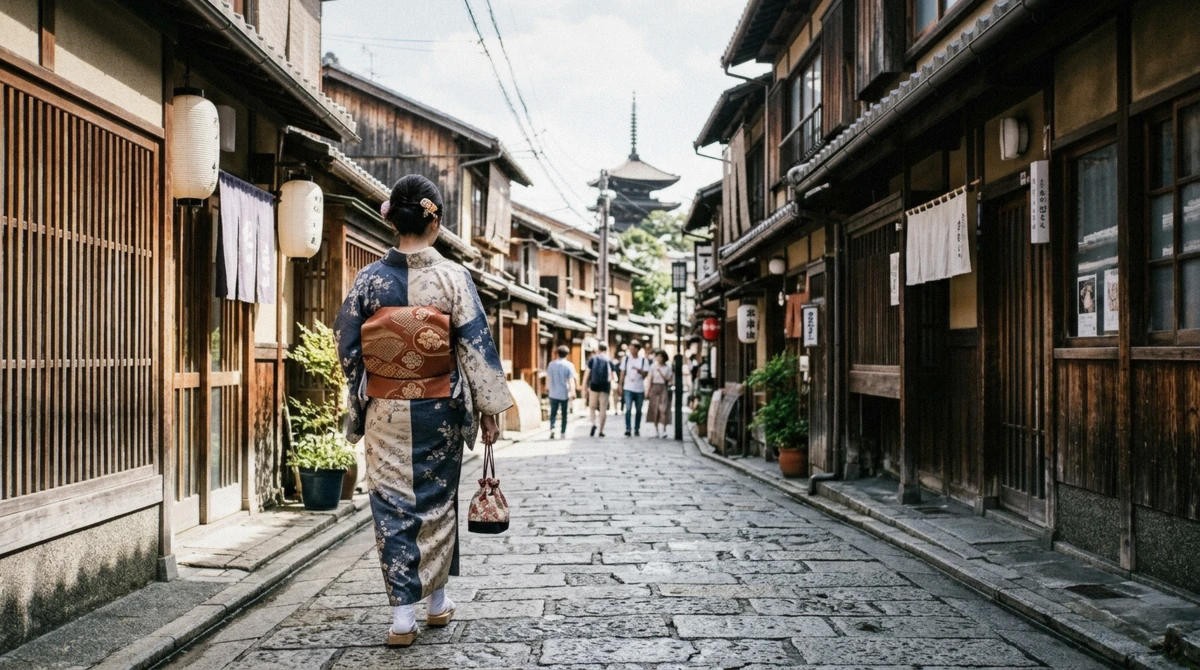
Quick answer
Yes, a visitor can wear a kimono in Japan, and Kyoto's mayor wrote in 2019 that he would be happy for a foreign admirer of kimono to enjoy his city in one: the objections are to misuse, not to wearers.
Key takeaways
- Japanese commentators quoted by The Real Japan say most Japanese are not offended and are often pleased when a foreigner wears a kimono
- Kyoto mayor Daisaku Kadokawa's letter dated 2 July 2019 invited a kimono admirer to enjoy the city in kimono
- Wrap the left side over the right: right over left is for the deceased
- A rental kimono is not a maiko's costume, and Gion's rules on photography and private lanes apply to you too
- To see a real maiko dance, book a maiko show with a Q&A instead of dressing as one
- The Gion rules are on the photography page
Prefer to see a maiko rather than dress as one?
These shows put a working maiko in front of you with an interpreter. They suit visitors who want the real thing and not a costume photo.
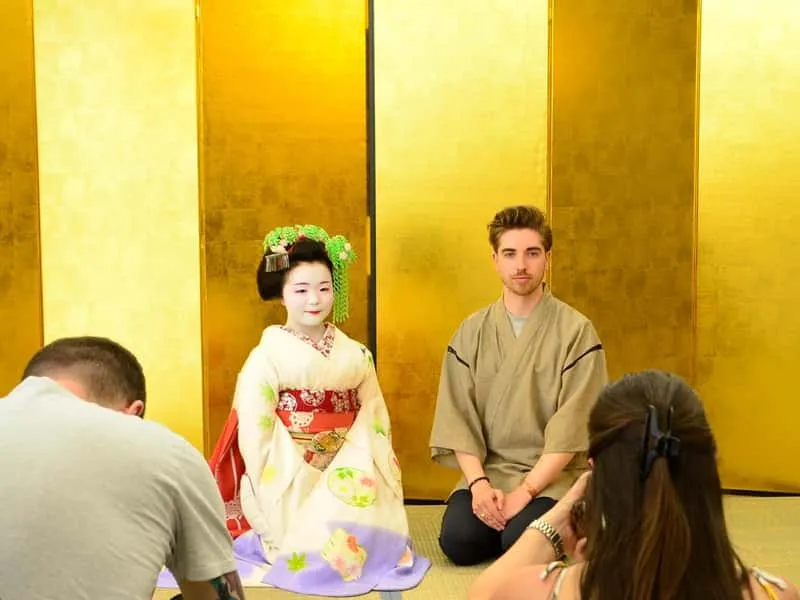 from $48
Meet a Real Kyoto Maiko — Intimate Show, Stories & Keepsake Photo
An affordable meet-and-greet with a Kyoto maiko, including a short dance, a friendly chat about apprentice life, and a keepsake photo. The most budget-friendly way to meet a…
- Meet and greet a real Kyoto maiko
- Short traditional dance performance
- Learn about apprentice geisha life
- Keepsake photo included — best value option
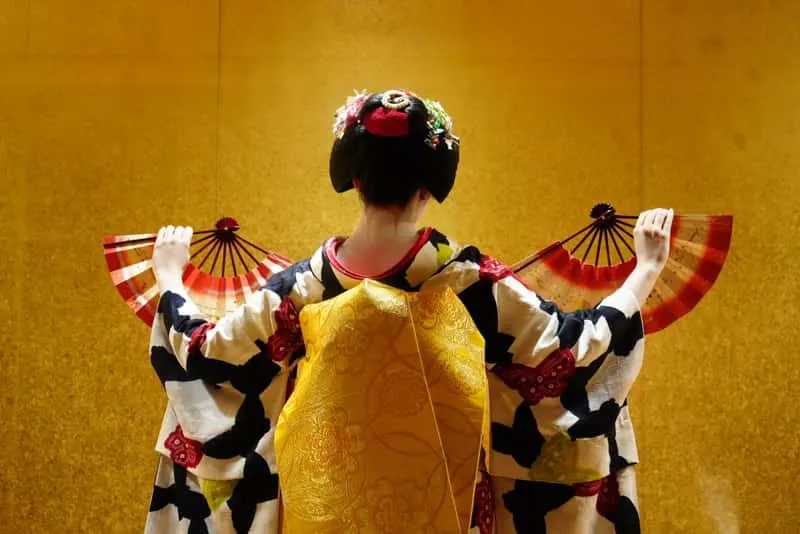 from $81
Authentic One-Hour Kyoto Geisha Show with Live Q&A and Photos
A focused one-hour geisha show in Kyoto featuring a live dance performance, an interactive Q&A, and a photo session with the performer. A quick, authentic way to see…
- Live geisha dance performance
- Interactive question-and-answer session
- Photos with the geisha included
- Near Kitano Tenmangu Shrine — easy to combine
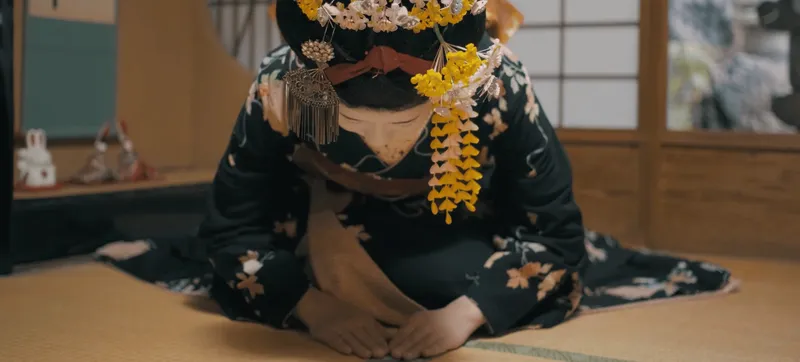 from $105
Gion Geisha Show & Cultural Walk with Traditional Dining
Stroll the lantern-lit lanes of Gion with a local guide, then watch an authentic geisha show in Kyoto before sitting down to a traditional Japanese meal. Combines a…
- Guided walk through Gion, Kyoto's historic geisha district
- Live geisha or maiko performance up close
- Traditional Japanese dining included
- Small group for an intimate cultural evening
Is it okay to wear a kimono if you're not Japanese?
In Japan, yes. Kimono is a garment, and Kyoto's rental shops exist largely to dress visitors for a day, including foreign ones. The more useful question is how to wear it well.
A badly worn kimono, a costume-style version or a use that mocks the garment draws more disapproval than a respectful visitor in a rented one.
Outside Japan the debate is sharper, and it is covered below in its own section. The short summary is that the Japanese commentators quoted below are far less worried about individual wearers than critics in the West are, while an American cultural magazine argues the opposite.
Source: The Real Japan.
How do Japanese people feel about foreigners wearing kimono?
Mostly positive, with a strong preference for care. The Real Japan, a Japan travel blog that earns referral income from kimono rental links, quotes the author Saki Yoshida saying Japanese people are generally not offended when foreigners wear kimono and often pleased, sometimes saying you look beautiful in it. Its publisher Rob Dyer adds that it would be rare for a Japanese person to express offence.
The same article names what does bother people. Many Japanese care how a kimono is worn and see it as clothing for special occasions. Misrepresentation, such as odd anime styles, is disliked, and commercial misuse draws more criticism than personal wear, for example a brand naming its underwear line KIMONO.
Some are also strict about how other Japanese people wear it, which Yoshida links to the struggling kimono industry. These are one writer's views.
This table sets the main positions side by side, with where each is printed.
| Source | Position | What it targets |
|---|---|---|
| The Real Japan (Saki Yoshida, Rob Dyer) | Generally welcomed, care about how it is worn | Misrepresentation and commercial misuse |
| City of Kyoto, mayor's letter, 2019 | Happy for an admirer to enjoy the city in kimono | A product named KIMONO |
| Dismantle magazine, 2019 | Wearing it often falls into appropriation | Fashion garments sold as kimonos |
| KIM+ONO, a robe brand | Appreciation, not appropriation, if done with respect | Wearing it like a costume |
Source: The Real Japan, Dismantle, KIM+ONO.
What did the mayor of Kyoto say about wearing kimono?
The clearest official statement from the city is a letter, and it welcomes admirers. In 2019 Mayor Daisaku Kadokawa wrote to Kim Kardashian West after she named a product line Kimono. The English letter on the City of Kyoto's site is dated 2 July 2019.
In it he says he appreciates her decision to reconsider using the name KIMONO, and that he would be happy if she could enjoy the city and its culture in kimono when she visits Kyoto.
That is the useful distinction. The objection was to a commercial brand using the word, and the invitation was to a person wearing the garment. It is the clearest signal available on what Kyoto itself regards as the problem.
Source: City of Kyoto letter, 2 July 20191.pdf).
What are the rules for wearing a kimono?
The main one is the closure. Wikipedia explains that a kimono is worn with the left side wrapped over the right, and that right over left is reserved for the deceased. The convention goes back to the Yōrō code of 718 CE and is still followed today.
Get it wrong and a passer-by will notice at once.
The way of wearing is called kitsuke, dressing. A kimono is worn with a wide sash, the obi, and usually with zōri sandals and tabi socks. A yukata is the informal, lighter version most often seen at summer festivals, so it is not the same garment for a winter walk.
This table lists the practical points a rental shop and The Real Japan give, plus the closure rule. It is a checklist before you leave the shop.
| Point | What to do | Source |
|---|---|---|
| Closure | Left side over right, never right over left | Wikipedia |
| Fitting time | Allow 20 to 30 minutes and use the toilet first | The Real Japan |
| Movement | Take small steps to keep the shape | The Real Japan |
| Toilet | Do not touch the obi and keep the cloth away from water | The Real Japan |
| Belongings | Carry little: towel, small bag, phone | The Real Japan |
| Changes | You may pay extra to swap after fitting | The Real Japan |
Staff handle the choosing, sash and fitting, even if you speak no Japanese, and English-friendly shops usually take bookings online or by email. Source: Wikipedia, The Real Japan.
Is it okay to dress as a maiko or geisha?
A rental kimono is fine, but a full maiko transformation raises a different question. Costumed visitors in a maiko look around Kiyomizu-dera are almost always paying guests of a dress-up shop and not working maiko. The tell is daytime, a held pose for a photograph and a friend holding the camera, as the authenticity guide explains.
A working maiko is on her way to an appointment, usually at dusk.
This table lists what marks a working maiko, using the Gion Kagai Art Museum for the physical details and the district's own street habits for the timing.
| Detail | Working maiko |
|---|---|
| Obi | 5.4 m long and 6 kg, hanging at the back |
| Footwear | Okobo clogs more than 10 cm tall |
| Make-up | White powder, upper lip coloured about a year after debut |
| When you see her | Around dusk, roughly 17:30 to 18:30, on her way to a banquet |
| Behaviour | Hurrying to an appointment, not posing for strangers |
A visitor in a rental set is dressed for a photo and has no appointment to reach. The difference matters because the district's residents ask every visitor, costume or not, to leave geiko and maiko alone. For the detail on who is who, see geiko versus maiko and are Kyoto geisha shows authentic.
Source: Gion Kagai Art Museum.
Where is it respectful to wear a kimono in Kyoto?
On public streets, in shrines and temples where visitors in kimono are common, and in Gion, within the same rules as every visitor. The Kyoto Tourism notice from the southern Gionmachi residents lists photography, eating and drinking in restricted areas, entering private property and loud noise among prohibited acts, and says the geiko and maiko are not mascot characters. Those rules apply whatever you wear.
Shrines and temples are places of worship and not photo backdrops, so keep a kimono shoot there quiet and out of the way of worshippers. The six private lanes off Hanamikoji are closed to photography and entry, so a dressed-up photo shoot there is the one clear no. See the Gion photography rules for the lanes.
Source: Kyoto Tourism.
What about wearing a kimono outside Japan?
This is where opinion divides, and there is no single answer. Dismantle magazine argues that wearing the garment often falls into cultural appropriation, because it turns a living culture's dress into adornment and reflects a history of power between the West and Japan. KIM+ONO, a brand that sells modern kimono-style robes, argues the reverse: that there is a big difference between appropriation and appreciation, and that learning the garment's history is the way to wear it respectfully.
The Real Japan notes that many Japanese find it hard to understand why a Westerner in a kimono abroad is criticised, because they do not label their culture as for Japanese only. They save their objection for significant misuse. In practice, the two sides agree on one thing, which is that a costume-style or mocking use is the thing to avoid.
If you buy a kimono rather than rent one, a Japanese-made garment worn properly, closure and all, is the safe choice.
Source: Dismantle, KIM+ONO, The Real Japan.
Should you rent a kimono in Kyoto?
If You want a respectful day in a kimono
Rent from an English-friendly shop, learn the closure rule and keep to public streets.
If You want a maiko transformation photo
Treat it as a costume session, stay out of the private lanes and never pose as a working maiko.
If You want to meet a real maiko
Book the meet-a-maiko show or the one-hour show with photos.
If You want a quiet evening walk in Gion
Join the after-dark Gion walk and learn the lanes from a guide.
What is the realistic way to meet a maiko?
Book a show. The tea house route needs an introduction, and a rental kimono does not open that door. A teahouse show with an interpreter does.
Compare the formats at geisha show Kyoto, and read do geisha girls still exist today for how many are working and why can't geishas marry before you ask a maiko about her life.
Frequently Asked Questions
Is it disrespectful to wear a kimono if you are not Japanese?
In Japan, generally not. The Real Japan quotes Japanese commentators saying most people are pleased when a foreigner wears one. What draws criticism is misuse, such as odd costume styles or commercial products using the name.
Do Japanese people mind tourists in kimono in Kyoto?
Mostly no, and rental shops cater to visitors. Residents of Gion do ask every visitor, kimono or not, to follow the district's rules on photography, private lanes and noise.
Which way do you wrap a kimono?
Left over right. Wikipedia says right over left is worn only by the deceased, a convention that dates to the Yōrō code of 718 CE.
Can you wear a kimono to a geisha show?
Yes, nothing forbids it, but the performance does not require it. A kimono does not change what you see, so book the show for the maiko, as with the one-hour show.
Is a rental kimono the same as a maiko's?
No. A maiko's obi is 5.4 metres long and weighs 6 kilograms, and her clogs are more than 10 centimetres tall, the Gion Kagai Art Museum says. A rental set is a lighter, simpler outfit, and the exact kit depends on the shop.
Do you need to speak Japanese to rent a kimono?
No. Staff handle the choosing, sash and fitting even if you speak no Japanese, The Real Japan says, and English-friendly shops usually take online or email bookings.
What if the kimono comes loose while you are walking?
Passers-by in touristy parts of Kyoto and Tokyo may help straighten it, according to The Real Japan. Taking small steps keeps it from shifting in the first place.
Is a yukata the same as a kimono?
A yukata is the informal, lighter garment most often seen at summer festivals, according to Wikipedia. It is a related garment, not an equivalent for formal wear.