Is Gion a Tourist Trap?
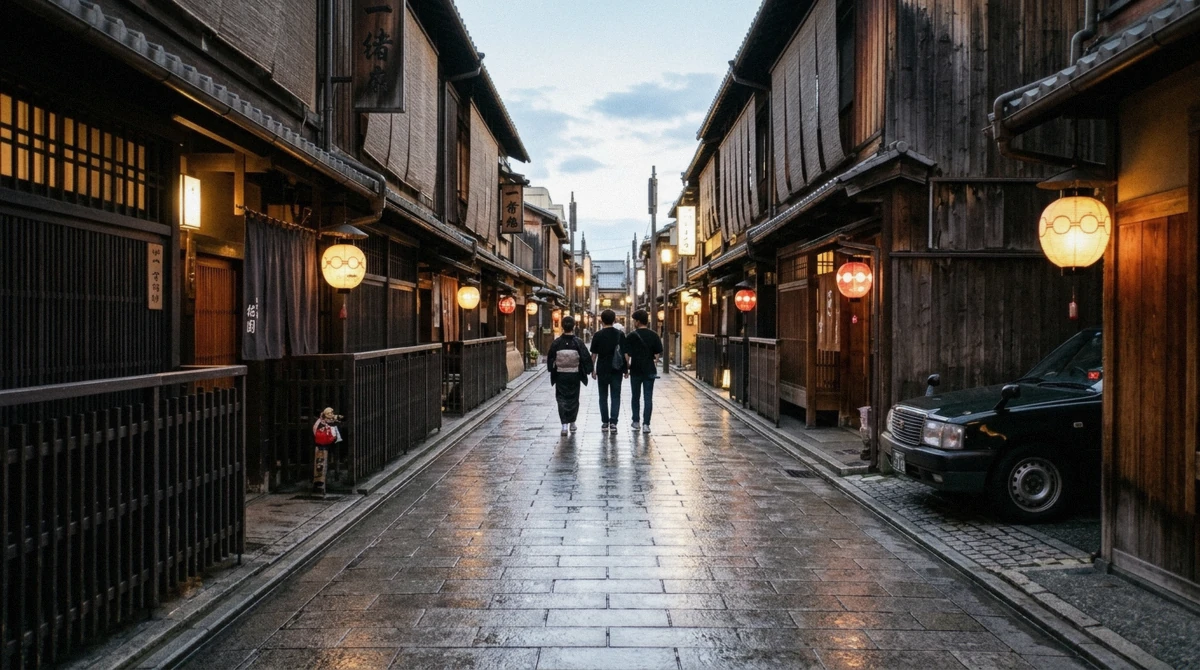
Gion is not a tourist trap, but its busiest street can feel like one if you treat it as a photo stop. So is Gion a tourist trap? About 15,000 sightseers walk Hanamikoji every day, according to the Gion Kagai Art Museum, yet the district is also a working neighbourhood of teahouses, an arts school and a theatre where geiko and maiko still train and perform. This page separates the crowded and staged parts from the real ones, lists the rules residents have set, shows when Gion is quietest this winter and ends with the realistic way to see a maiko, which is a booked geisha show in Kyoto and not a lucky sighting.
Quick answer
Gion is worth visiting, but Hanamikoji at peak hours is a tourist trap in feel: about 15,000 people a day share one street, so go early, add the quieter lanes and book a real show.
Key takeaways
- About 15,000 sightseers walk Hanamikoji each day, and foreigners make up 70 to 80 percent of the visitors to the district's own art museum
- Residents call Gion a residential area and not a theme park, and the penalties for chasing geiko or maiko run up to six months in prison or ¥500,000 (about $3,145)
- Shirakawa canal is quieter than Hanamikoji, and Gion Corner's winter shows run Tuesday to Friday only, from 1 December to 11 March
- The cheapest guided way in is an after-dark Gion walk from $28, and the most direct is a one-hour maiko show with a Q&A for $81
- Whether the shows are staged is answered in are Kyoto geisha shows authentic
Which Gion experiences are worth paying for?
These three skip the crowded-street problem by putting you in a room or on a guided route. The after-dark walk is the best-reviewed and cheapest, while the two shows put a maiko in front of you.
 from $28
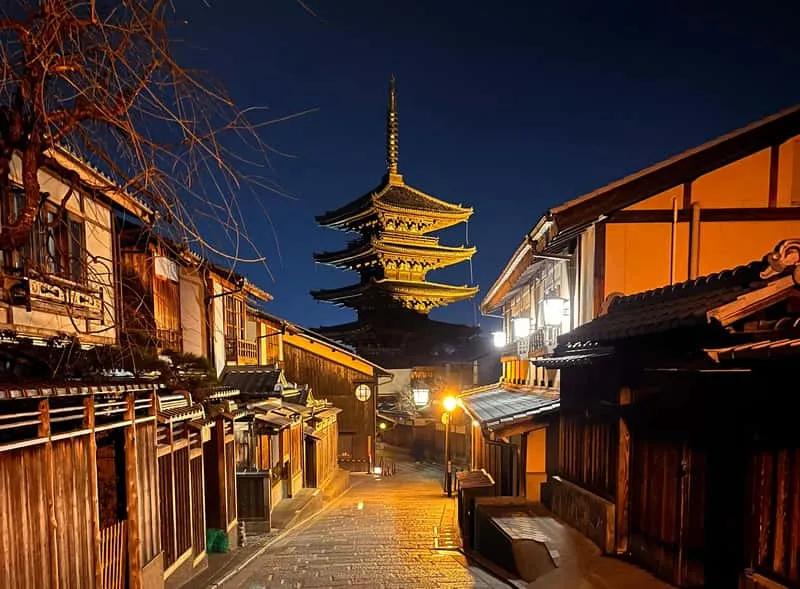
After-Dark Gion Geisha District Walking Tour with Insider Trivia
An evening walking tour through Gion and Pontocho where a guide shares geisha culture, history, and trivia as you explore the lantern-lit teahouse streets. Your best chance to…
- Evening walk through Gion and Pontocho
- Geisha history, culture, and insider trivia
- Chance to glimpse a geiko or maiko after dark
- Most-reviewed, top-rated value tour
 from $48
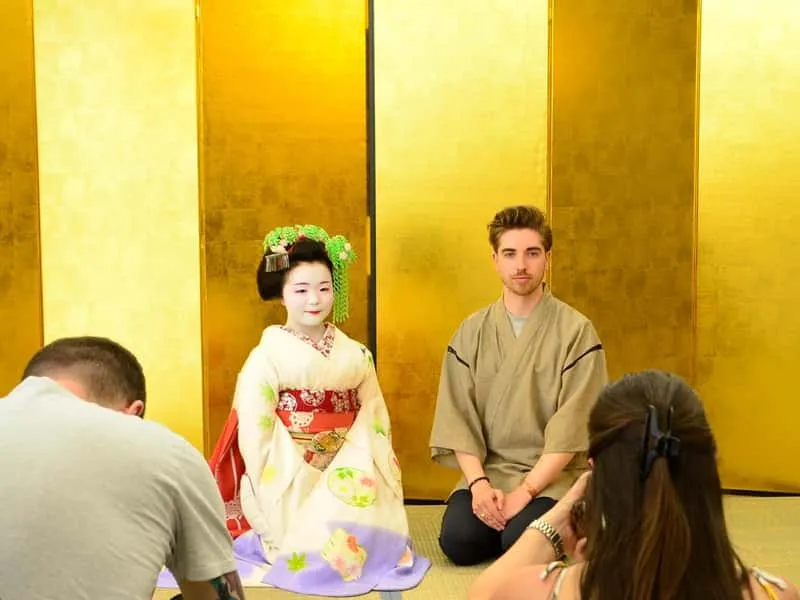
Meet a Real Kyoto Maiko — Intimate Show, Stories & Keepsake Photo
An affordable meet-and-greet with a Kyoto maiko, including a short dance, a friendly chat about apprentice life, and a keepsake photo. The most budget-friendly way to meet a…
- Meet and greet a real Kyoto maiko
- Short traditional dance performance
- Learn about apprentice geisha life
- Keepsake photo included — best value option
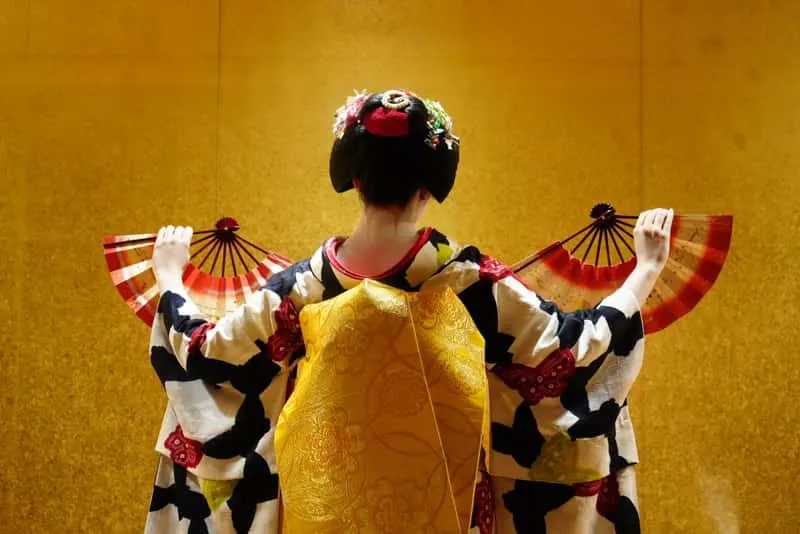 from $81
Authentic One-Hour Kyoto Geisha Show with Live Q&A and Photos
A focused one-hour geisha show in Kyoto featuring a live dance performance, an interactive Q&A, and a photo session with the performer. A quick, authentic way to see…
- Live geisha dance performance
- Interactive question-and-answer session
- Photos with the geisha included
- Near Kitano Tenmangu Shrine — easy to combine
Is Gion a tourist trap?
No, but one street of it behaves like one. Hanamikoji between Shijo Avenue and Kennin-ji is the most photographed stretch of Gion, and it is crowded because every guidebook sends visitors to it. The district around it is something else, a residential area where geiko and maiko live in okiya, train at an arts school and work evenings in teahouses that are closed to strangers.
The test is simple. If your plan is to stand on Hanamikoji and wait for a maiko to pass, you will join thousands of other people doing the same thing and you will probably be disappointed. If your plan is to walk the district at a quiet hour, see a performance and eat somewhere you chose in advance, Gion rewards the trip.
A Kyoto-born guide at Wo.oW Travel puts it this way: greater accessibility should never mean less respect, and Gion is a living cultural neighbourhood, not simply an attraction.
Source: Gion Kagai Art Museum, Wo.oW Travel.
Is Gion in Kyoto worth visiting?
Yes, for a first visit. Japan Guide describes Gion as the district centred on Shijo Avenue between Yasaka Shrine and the Kamo River, with preserved machiya houses on Hanamikoji and a canal lane at Shirakawa lined with willows and teahouses. Both are free to walk, and both look best in the early morning or in the hour after the lanterns come on.
Across the river, Pontocho Alley is the lantern-lit dinner street.
What changes the verdict is how much you expect. Gion gives you atmosphere, architecture and, with planning, a performance. It does not give you a private encounter with a geiko on the street, because the women you might see are on their way to work.
A second visit is worth less than a first, which is why the page on staying in Gion or downtown suggests a base near it and not inside it.
Source: Japan Guide.
Why does Gion feel like a tourist trap?
Numbers explain it. The Gion Kagai Art Museum counts about 15,000 sightseers on Hanamikoji each day, and the same article says overtourism has become a problem there, with visitors sometimes chasing geiko and maiko and pressing them for photos while they work. Kyoto as a whole received about 62.79 million visitors in 2025, including a record 12.68 million from overseas, according to Kyoto City's 2025 tourism survey.
The criticism is not new. In 2025 New York Magazine called Kyoto the loveliest tourist trap on earth, and the tour operator Chris Rowthorn answered that most visitors in rented kimono were simply enjoying themselves. Both sides agree on the street itself: Hanamikoji at peak hours is crowded.
This table rates six common Gion stops by crowd level, cost and whether they feel staged, using the Gion Kagai Art Museum, Japan Guide and the residents' message published by Kyoto Tourism.
| Stop | Crowds | Cost | Verdict |
|---|---|---|---|
| Hanamikoji at dusk | About 15,000 visitors a day | Free | Atmospheric but packed, and the likeliest place to feel trapped |
| Shirakawa canal | Quieter than Hanamikoji, Japan Guide says | Free | The best free corner of Gion |
| Private side lanes | Closed to visitors | Not allowed | Off limits, not an attraction |
| Gion Corner | Seated show, two a night | ¥5,500 (about $35), premium ¥6,600 (about $42) | A sampler of arts in 50 minutes |
| Teahouse show with a maiko | A small room | From $48 | The closest thing to the real work |
| Kimono rental photo walk | Heavy on Hanamikoji | Rental fee varies | Fun, but you join the crowd |
Source: Gion Kagai Art Museum, Kyoto City, Chris Rowthorn, Kyoto Tourism.
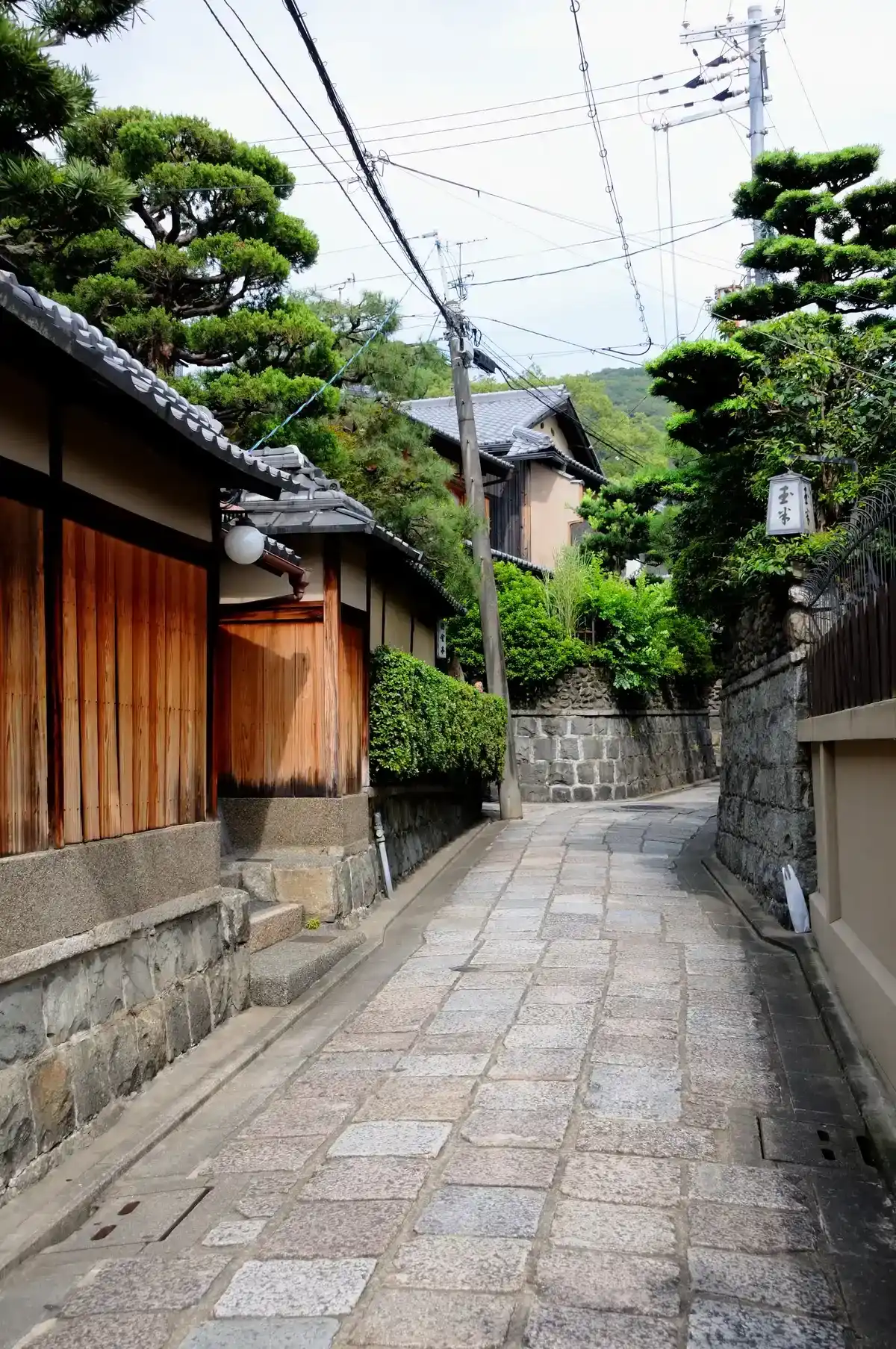
A stone-paved lane in Gion. Photo: Josep M. Gracia, CC BY-SA 4.0, via Wikimedia Commons
What is real in Gion, and what is staged?
The real parts are the ones with a working reason to exist. The Gion Women's Arts School trains all 79 geiko and maiko of Gion Kobu in Inoue-style dance, tea ceremony and shamisen, according to Premium Japan, and the Kaburenjo theatre stages the Miyako Odori every April. The teahouses, called ochaya, take guests only by invitation from a trusted regular, and the museum describes this as a long-term relationship.
The staged parts are honest about it. A booked teahouse show is a performance arranged for visitors, with an interpreter, and Gion Corner is a tourist sampler that includes dances by maiko. Neither pretends to be a private banquet.
The risk is the unbooked middle: a rental-kimono shoot in a lane that is private property, or a stranger who says he can introduce you to a geiko for cash.
A useful rule is to pay for things with a venue, a start time and a cancellation policy, and to be wary of anything that promises a maiko on the street.
Source: Premium Japan, Gion Kagai Art Museum.
Which parts of Gion should you skip?
Skip the private lanes that branch off Hanamikoji. Our guide to Gion photography rules lists six: Yayoi-koji, Nanzono-koji, Hatsune-koji, Aoyagi-koji, Kosode-koji and Nishi-Hanamikoji. Photography on them has been banned since October 2019, and from April 2024 the small lanes were closed to visitors altogether.
Signs at the lane mouths carry a posted charge of up to ¥10,000 (about $63).
Also skip following. The residents' message from southern Gionmachi, dated 9 January 2024 and signed by the Gion Kobu Tea Houses Association, the Gion Geiko Association, Kennin-ji and the Southern Gionmachi Council, asks visitors not to stop, touch, follow or take unauthorised photos or videos of geiko and maiko. The district is a residential area, not a theme park, and a resident's report may bring police to the scene.
Source: Kyoto Tourism.
What are the rules that keep Gion from being a theme park?
Most are plain law, quoted in the residents' message of 9 January 2024.
This table lists the penalties named in the residents' message published by Kyoto Tourism, with each yen figure converted at ¥159 to the dollar.
| Behaviour | Penalty named | About in USD |
|---|---|---|
| Blocking a path or stalking | Detention under 30 days or a fine under ¥10,000 | Under $63 |
| Pulling someone's hand or clothes | Up to six months in prison or up to ¥500,000 | Up to $3,145 |
| Blocking a road or sidewalk to take photos | Fine up to ¥50,000 | Up to $314 |
| Trespassing on temple, shrine or private property | Up to three years in prison or up to ¥100,000 | Up to $629 |
| Throwing away garbage | Fine up to ¥30,000 | Up to $189 |
| Loud noise | No penalty listed | None listed |
None of this stops a polite visitor. Walk on the public street, keep moving, eat and drink away from the lanes and leave the women alone, and Gion is perfectly pleasant.
Source: Kyoto Tourism.
When is Gion least crowded this winter?
Early morning and winter weekdays are the quietest. Winter is Gion's calm season, with shorter queues and cold evenings. Maiko are usually on the streets around 17:30 to 18:30 as appointments begin, so that hour is the busiest for watchers, while Shirakawa in the morning is nearly empty.
This table lists the winter 2026-27 dates that change what Gion offers, from the official Gion Corner schedule and the Miyako Odori ticket sale.
| Date | What | What it means for you |
|---|---|---|
| 1 Dec 2026 to 11 Mar 2027 | Gion Corner winter schedule | Tuesday to Friday at 18:00 and 19:00, not on public holidays |
| 26 Dec 2026 to 4 Jan 2027 | Gion Corner closed | No stage show at New Year, so book a teahouse show |
| 6 Jan 2027, 10:00 | Miyako Odori tickets on sale | Shows run 1 to 30 April, ¥5,000 to ¥8,000 (about $31 to $50) |
| 11 and 23 Feb 2027 | Gion Corner closed | Confirm the date before you go |
Source: Gion Corner, Gion Kagai Art Museum.
Is a teahouse show or Gion Corner a tourist trap?
Neither is a trap if you know what you are buying. Gion Corner runs about 50 minutes at 18:00 and 19:00 and is a sampler of arts at ¥5,500 (about $35) for an adult. The teahouse shows put one maiko in a small room with an interpreter, and the meet-and-greet is 45 minutes for $48 while the one-hour show with a Q&A is $81.
The better question is what you want. A sampler of arts suits a rainy evening, a conversation with a maiko suits curiosity, and a walk suits a limited budget. The cost guide at geisha show Kyoto cost compares them, and the one on geiko versus maiko explains who you are looking at.
Source: Gion Corner.
How should a first-timer spend one evening in Gion?
Start in daylight and let the evening decide the rest. Arrive around 16:30 and walk Shirakawa canal and the public grounds of Kennin-ji while the lanes are still empty, then take Hanamikoji at about 17:30 when the lanterns are on. That hour is also when maiko most often walk to appointments, so keep moving and keep your camera down.
At 18:00 or 19:00 go indoors. In winter Gion Corner plays Tuesday to Friday, and on other nights a booked teahouse show or the after-dark walk fills the same slot. Around 21:30 to 22:00 the appointments end and geiko and maiko walk home, which is a second quiet window.
Eat somewhere you booked, because many Gion restaurants are small and fill early.
Source: Gion Corner, Japan Guide.
What is the realistic way to see a maiko in Gion?
Book a show. A maiko on the street is a passing glimpse and a risk of crowding her, while a booked show is a performance arranged with her agreement, in a room, with a photo session. The meet-a-maiko show, the private hour with a maiko and the geisha dinner show cover three budgets.
If you would rather not book, how to see a geisha in Kyoto without a tour lists the free options and their odds. You can compare every format side by side on the Geisha Show Kyoto homepage.
Frequently Asked Questions
Is Gion overcrowded?
On Hanamikoji at dusk, yes. The Gion Kagai Art Museum counts about 15,000 sightseers a day, and Shirakawa is quieter, according to Japan Guide.
Can you walk through Gion for free?
Yes. Hanamikoji and Shirakawa are public streets and free. The private side lanes are closed to visitors, so stay on the public road. The full street list is in are tourists allowed in the geisha district.
Is Gion worth it at night?
Yes, for the lanterns and the atmosphere, but you will share the street. An after-dark Gion walk for $28 gives you a guide who knows which lanes are open.
Is Gion safe?
The district is a residential area and generally calm. The main risk is breaking the residents' rules, since penalties run up to ¥500,000 (about $3,145) for pulling a geiko's clothes.
Do geisha still live in Gion?
Yes. Gion Kobu alone had 79 geiko and maiko in 2025, all enrolled at the district's arts school, according to Premium Japan.
Is Gion Corner worth it?
It is a 50-minute sampler of tea ceremony, dance and other arts at ¥5,500 (about $35). For a conversation with a maiko, a one-hour show is a better fit.