Are Tourists Allowed in the Geisha District?

Yes, tourists are allowed in Gion, Kyoto's geisha district, and only a short run of private lanes off Hanamikoji has been closed to visitors since 2024. So are tourists allowed in the geisha district? Below are the streets you may walk, at what time of day, and the cases where you need an introduction or a ticket, so you know where to go before a Kyoto geisha show or an evening stroll.
Quick answer
Yes, tourists are allowed in Gion, Kyoto's geisha district: Hanamikoji and the Shirakawa canal are public, and since April 2024 only the small private lanes off Hanamikoji are closed to visitors.
Key takeaways
- Public streets stay open to everyone, and the closed lanes carry signs in Japanese, English and Chinese with a posted charge of up to ¥10,000 ($63)
- Geiko and maiko cross Hanamikoji to their appointments in the early evening, roughly 17:30 to 18:30, when about 15,000 sightseers a day have already passed through
- You cannot walk into a teahouse uninvited: an ochaya takes guests only by introduction from a trusted regular
- Foreigners can see geisha in exactly the same ways Japanese visitors can, at a show, a stage dance or a booked evening
- The rules for the street itself are in Gion photography rules and the verdict on crowds is in is Gion a tourist trap
- A guided Gion walk after dark keeps you on public streets with a local guide
Which bookings keep you inside the rules?
These stay on public ground or take you into a room where the performance is arranged, so there is nothing to trespass.
 from $28
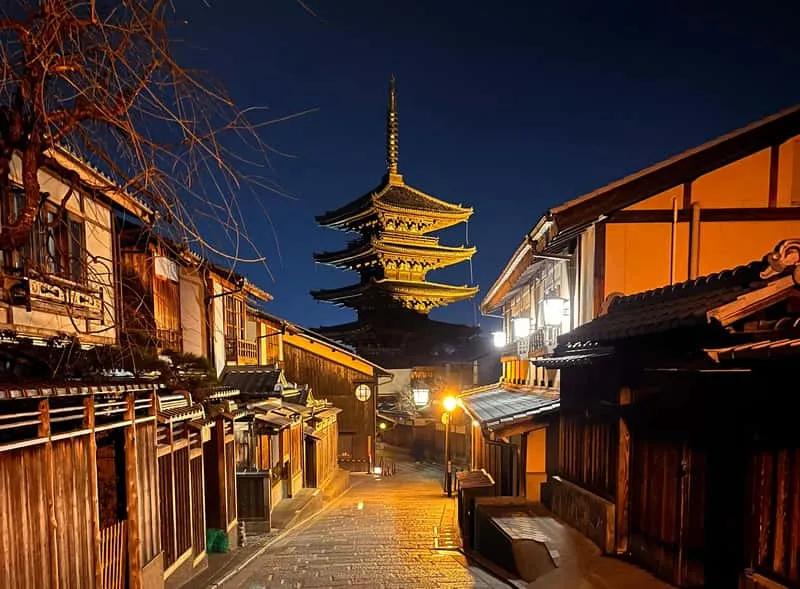
After-Dark Gion Geisha District Walking Tour with Insider Trivia
An evening walking tour through Gion and Pontocho where a guide shares geisha culture, history, and trivia as you explore the lantern-lit teahouse streets. Your best chance to…
- Evening walk through Gion and Pontocho
- Geisha history, culture, and insider trivia
- Chance to glimpse a geiko or maiko after dark
- Most-reviewed, top-rated value tour
 from $60
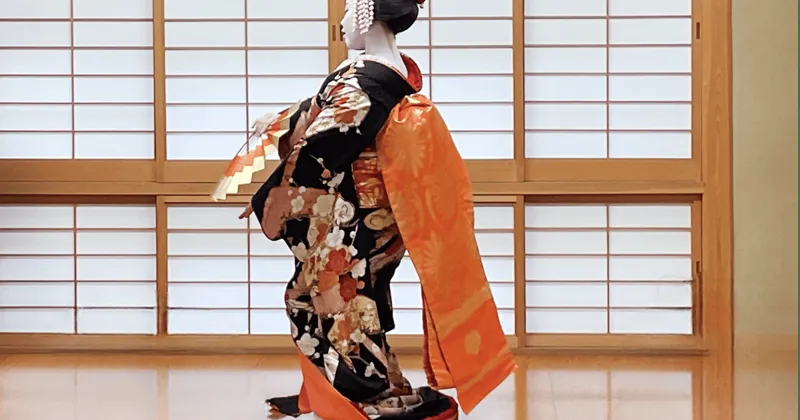
Meet the Geisha Maiko with Gion Walking Tour
Walk Gion's lanes with a local guide, then step into a private teahouse where a maiko and a former geiko dance to live music, answer your questions and…
- Maiko and former geiko dance in a private teahouse
- Optional 70-80 minute Gion walk, or show only
- Q&A with the maiko and a photo session
- Free cancellation up to 24 hours before
 from $48
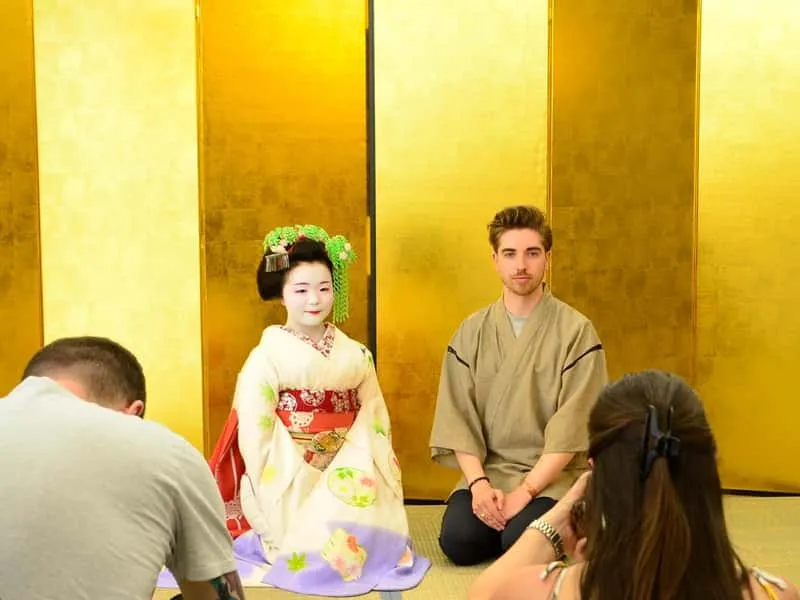
Meet a Real Kyoto Maiko — Intimate Show, Stories & Keepsake Photo
An affordable meet-and-greet with a Kyoto maiko, including a short dance, a friendly chat about apprentice life, and a keepsake photo. The most budget-friendly way to meet a…
- Meet and greet a real Kyoto maiko
- Short traditional dance performance
- Learn about apprentice geisha life
- Keepsake photo included — best value option
Are tourists allowed in the geisha district?
Yes. Gion is a living neighbourhood open to walkers, not a gated or ticketed zone. The Luxury Japan Travel journal states plainly that Gion is not closed to tourists and that since 2024 only a short run of private lanes off Hanamikoji has been signed off limits, with a fine of 10,000 yen for anyone who walks in.
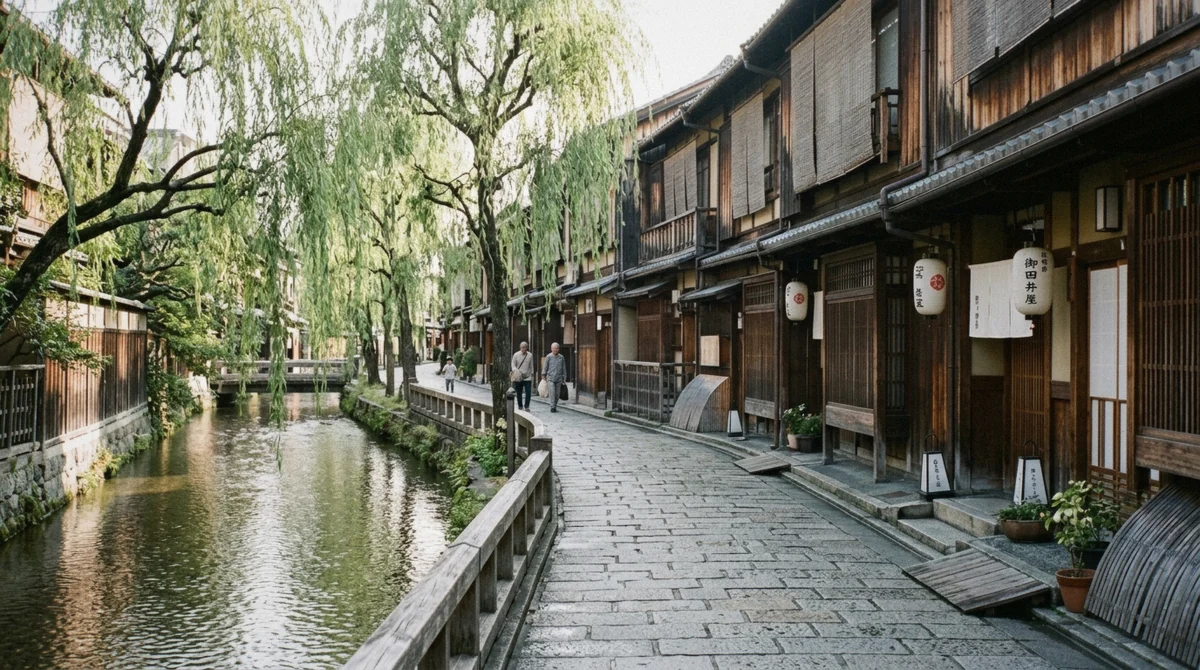
Hanamikoji itself, the Shirakawa canal walk, the approach to Yasaka Shrine and the district's two public dance theatres stay open to everyone.
The Guardian reported the change in March 2024 as a ban on entering Gion's narrow private streets, adding that the main thoroughfare would remain open to tourists. Overseas headlines made it sound like a closure of the whole district. It was not.
Source: Luxury Japan Travel, The Guardian.
Which streets can tourists walk in Gion?
This table lists the main public walks in and around the geisha districts, what each is like and the best moment to go, using Japan Guide and Kyoto Daily Tours.
| Place | Open to tourists? | What to expect | Best moment |
|---|---|---|---|
| Hanamikoji-dori, Shijo to Kennin-ji | Yes | The main street of Gion Kobu with teahouses and restaurants | Early morning, or around 17:30 for passing geiko and maiko |
| Shirakawa canal and Tatsumi Bridge | Yes | Willows, stone paving and a quieter feel than Hanamikoji | Evening, when lanterns are lit |
| Yasaka Shrine approach and grounds | Yes | Free to enter and open at all hours | After dark for the lanterns |
| Kennin-ji | Yes, in visiting hours | Kyoto's oldest Zen temple just south of Hanamikoji | Daytime |
| Pontocho | Yes | A narrow lantern-lit lane of restaurants between the Kamo River and Kiyamachi | Early evening |
| Private side lanes off Hanamikoji | No | Closed since April 2024, signed in three languages | Not at all |
Japan Guide says Hanamikoji runs from Shijo Street to Kennin-ji and describes Shirakawa as the quieter part of Gion. Kyoto Daily Tours lists Hanamikoji, Shirakawa, Yasaka Shrine, Kennin-ji and Pontocho as the places to walk. For the exact lane names and the camera rules on each, read Gion photography rules.
Source: Japan Guide, Kyoto Daily Tours, Luxury Japan Travel.
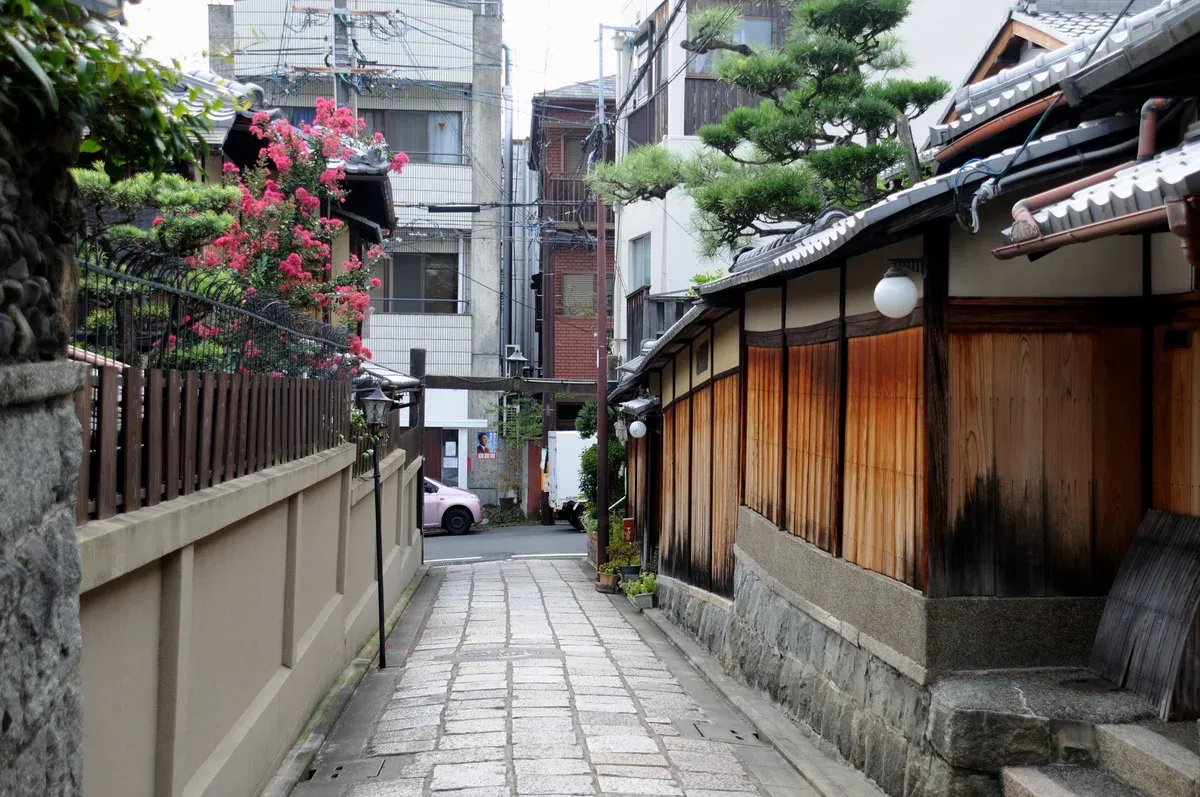
A stone-paved lane in Gion, Kyoto. Photo: Josep M. Gracia, CC BY-SA 4.0, via Wikimedia Commons
What time of day can tourists walk through Gion?
Any hour on the public streets, but the hours are not equal. The Gion Kagai Art Museum counts about 15,000 sightseers on Hanamikoji each day, so the street at midday is a crowd. The same museum says overtourism has become a problem there, with visitors sometimes chasing geiko and maiko and pressing them for photos while they work.
This table sets the hours of a Gion day against what you will find on the street and what each hour is good for.
| Time | What to expect | What it is good for |
|---|---|---|
| 7:00 to 9:00 | Quiet streets, shops closed | Architecture and photographs of buildings, the Gion District guide says |
| 9:00 to 16:00 | The busiest hours, many visitors in rented kimono | Temples, shops and Yasaka Shrine |
| About 17:30 to 18:30 | Geiko and maiko walk to evening appointments | A passing glimpse, not a performance |
| 18:00 and 19:00 | Gion Corner shows start | A structured, ticketed way to see a maiko dance |
| After dark | Lanterns on, restaurants open, residents at home | A quiet walk, with voices kept low |
The pattern matters. The one window when a geiko or maiko is on the street is also when the street is full of people hoping to see one, and Luxury Japan Travel notes that the pressure that produced the signs moved onto the public street, where a geiko crossing to an engagement still meets a wall of phones. If you go at 17:30, go to look and walk on.
Does the district change by season?
The streets do not, but the stage calendar does. In winter Gion Corner plays on Tuesday to Friday only from 1 December to 11 March and is closed from 26 December to 4 January, according to its own site, so New Year week is the thinnest week for anything with a stage. The spring odori fill March to May and Gion Higashi's Gion Odori comes in autumn.
Two fixed dates bring geiko and maiko outdoors. On 1 August, Hassaku, Gion Kobu's maiko and geiko in black crested kimono make a formal greeting round to their teachers and teahouses, which our guide to seeing geisha without a tour calls a working morning watched from a respectful distance and not a photo opportunity. On 25 February, Baikasai at Kitano Tenmangu has Kamishichiken's geiko and maiko serving tea in the plum grove.
Check each event's official page for the year's timing.
Source: Kyoto Gion Corner.
Can foreigners see geishas?
Yes, on the same terms as anyone else. Nationality changes nothing, and the Gion Corner nightly show, the spring odori and the booked teahouse shows all sell to anyone with a ticket. Gion Kobu's Miyako Odori runs from 1 to 30 April 2027, and the Gion Higashi district answers with its Gion Odori in autumn.
What visitors cannot do is walk into an ochaya and ask to be served. The Gion Kagai Art Museum says teahouse use needs an invitation from a trusted regular client, in what it calls a long-term relationship. That is why booked shows, which put a maiko in a room arranged for visitors, exist.
For the public and free routes, read how to see a geisha without a tour.
Source: Gion Kagai Art Museum, Luxury Japan Travel.
Do tourists need permission or a ticket to enter Gion?
No, for the streets. There is no gate, no admission and no pass for Hanamikoji, Shirakawa or Yasaka Shrine. The permission you do need is a courtesy one.
The residents' message from southern Gionmachi, published by Kyoto Tourism, says the area is a place where people live their daily lives, not a theme park, and asks visitors to refrain from nuisance behaviour.
Tickets are needed for what happens indoors: Gion Corner, the Kaburenjo theatre during the odori and any teahouse show. The streets themselves stay free, and that is the one thing the closures did not change.
Source: Kyoto Tourism.
Can tourists go into a teahouse?
Not unless invited. Luxury Japan Travel explains the rule as ichigensan okotowari, no first-time guests without an introduction, which it says has governed the ochaya for far longer than Gion has had street signs. The ochaya decides whom it receives, and it decides on a relationship that money alone cannot buy.
A teahouse doorway is also a place to keep clear. Our photography guide lists ochaya entrances as private even when they face a public street, so step back and let staff and guests pass. If you want the experience of a teahouse room without the introduction, the booked formats on this site are built for visitors, from a short meet-and-greet to a private hour.
Source: Luxury Japan Travel.
Are guided tours allowed in the geisha district?
On public streets, yes. The closed private lanes are the exception, and the Japanese text of the signs states that entry and photography by individual tourists and by guided tours are both prohibited there, as our photography guide notes. An evening walk that follows Hanamikoji, Shirakawa and Pontocho stays within the rules.
The after-dark Gion walking tour runs 100 minutes through Gion and Pontocho for $28, and its guide shares the district's history and the manners to follow. Operators that promise to take you into a private lane to photograph a maiko are selling something the residents' council has closed. Luxury Japan Travel describes tour groups sold on exactly that promise as part of the reason the lanes closed.
Source: Luxury Japan Travel.
Are the other geisha districts open to tourists?
Kyoto has five geisha districts, called hanamachi, and the public streets of each are open to walkers. This table lists them with their theatres and their annual public dances.
| District | Where | Theatre | Public dance |
|---|---|---|---|
| Gion Kobu | Central Gion | Gion Kobu Kaburenjo | Miyako Odori |
| Pontocho | Between the Kamo River and Kiyamachi | Pontocho Kaburenjo | Kamogawa Odori |
| Miyagawacho | South of Gion along the river | Miyagawacho Kaburenjo | Kyo Odori |
| Gion Higashi | Eastern Gion | Gion Kaikan | Gion Odori |
| Kamishichiken | Beside Kitano Tenmangu | Kamishichiken Kaburenjo | Kitano Odori |
The residents' message is written for southern Gionmachi, but the sensible rule is the same everywhere: stay on public streets, do not enter a doorway or a lane that looks private and treat a woman in kimono as someone on her way to work. See geiko versus maiko for how to read who you are looking at.
Source: Kyoto Tourism, Kyoto Daily Tours.
What should tourists do when they meet a geiko or maiko?
Step aside and let her pass. The residents' message from southern Gionmachi asks visitors not to stop, touch, follow or take unauthorised photos or videos of any geiko or maiko, and says they are not mascot characters. Kyoto Daily Tours puts it the same way: never chase, block or touch them, because they are usually on the way to work and cannot be late.
The reasoning is simple. A maiko's hair and kimono took an hour or more to prepare, and the short walk between the okiya and the teahouse is the only part of her working day a stranger will see, as Luxury Japan Travel describes it. A tourist who steps into her path costs her time she does not have.
For the detail of what counts as touching and the penalties, read can you touch geishas.
Source: Kyoto Tourism, Kyoto Daily Tours, Luxury Japan Travel.
What is the realistic way for tourists to meet a maiko?
Book an arranged meeting. A lucky street sighting is possible at dusk but it is not a plan, and an evening with a geiko or maiko is properly arranged through a booking or an introduction. The meet-a-maiko show costs $48 for 45 minutes with a dance, stories and a keepsake photo, and the one-hour show with a Q&A costs $81.
If you would rather walk first, the Gion walk with a maiko show costs $60 and combines the district with a teahouse performance. Browse all current options for a geisha show in Kyoto and check the date on the booking page.
Frequently Asked Questions
Is Gion closed to tourists?
No. Only a short run of private lanes off Hanamikoji is closed, Luxury Japan Travel reports. Hanamikoji, Shirakawa and Yasaka Shrine are public.
Can tourists go to the geisha district at night?
Yes, the public streets are open at any hour. Keep voices low because residents live there. A guided night walk is a calm way to do it.
Can foreigners see geishas in Kyoto?
Yes. Shows, odori dances and booked evenings sell to anyone, for example the one-hour show.
Do you need a ticket to walk in Gion?
No. The streets are free. Tickets are for indoor shows such as Gion Corner and the odori.
What time do geisha walk through Gion?
Usually in the early evening, roughly 17:30 to 18:30, on the way to appointments. It is not a performance.
Can tourists enter the private lanes?
No. Signs in Japanese, English and Chinese warn of a charge of up to ¥10,000 ($63), and guided tours are included in the ban.