Is It Better to Stay in Downtown Kyoto or Gion?
Downtown Kyoto is the better base for most visitors, and Gion is the better base if quiet lanes at night matter more than shops and late restaurants, because the two are only about 10 minutes apart on foot. If you are still weighing whether it is better to stay in downtown Kyoto or Gion, this page compares the two by the things a geisha-show trip depends on: walking time to the show venues, the evening and winter 2026-27 calendar, the lodging tax and the house rules of the district. It ends with the realistic way to meet a maiko from either base, which is a booked geisha show in Kyoto and not a stroll down Hanamikoji.
Quick answer
Downtown Kyoto is the better base for most visitors, and Gion Corner is only 10 minutes on foot from Hankyu Kawaramachi and 5 minutes from Keihan Gion-Shijo, so a downtown hotel does not cost you the geisha district.
Key takeaways
- Gion Corner lists 5 minutes on foot from Keihan Gion-Shijo and 10 minutes from Hankyu Kawaramachi, so downtown is a short walk from the district
- Pick Gion for lantern-lit lanes at night and early walks. Pick downtown for restaurants, shopping and train links
- From Kyoto Station, Gion Corner is City Bus 206 plus a 5-minute walk, and the downtown stop is about 20 minutes away
- Kyoto's lodging tax since 1 March 2026 runs from 200 to 10,000 yen per person per night, so read the room rate per person before you compare areas
- Whichever base you choose, a maiko show with a Q&A is the dependable way to meet one
- The street rules around Hanamikoji apply to hotel guests too, see Gion photography rules
Which geisha shows fit a Gion or downtown base?
Every show below starts in or beside Gion, so both bases work. The evening walk is the cheapest way in, the one-hour show is the most-booked format, and the dinner show suits a night you want to stay out.
 from $28
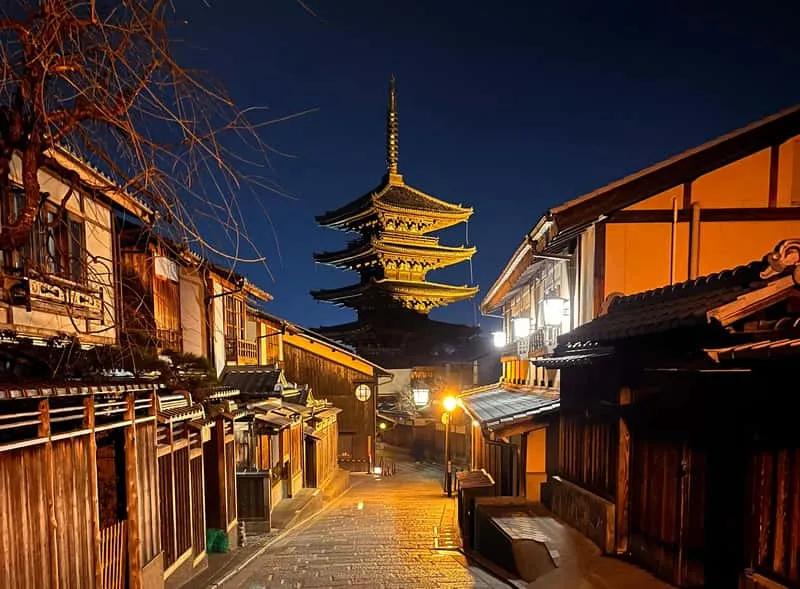
After-Dark Gion Geisha District Walking Tour with Insider Trivia
An evening walking tour through Gion and Pontocho where a guide shares geisha culture, history, and trivia as you explore the lantern-lit teahouse streets. Your best chance to…
- Evening walk through Gion and Pontocho
- Geisha history, culture, and insider trivia
- Chance to glimpse a geiko or maiko after dark
- Most-reviewed, top-rated value tour
 from $81
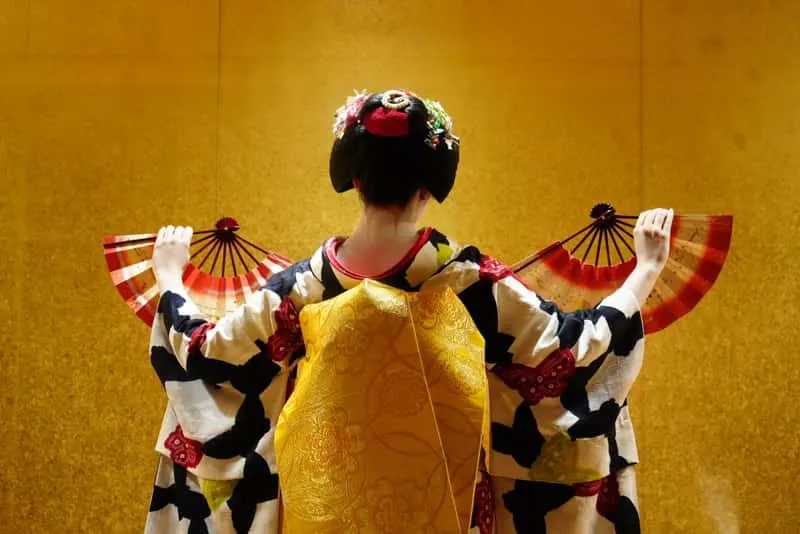
Authentic One-Hour Kyoto Geisha Show with Live Q&A and Photos
A focused one-hour geisha show in Kyoto featuring a live dance performance, an interactive Q&A, and a photo session with the performer. A quick, authentic way to see…
- Live geisha dance performance
- Interactive question-and-answer session
- Photos with the geisha included
- Near Kitano Tenmangu Shrine — easy to combine
 from $105
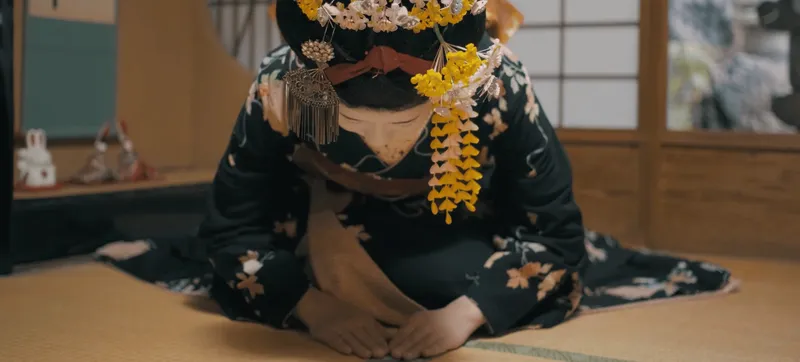
Gion Geisha Show & Cultural Walk with Traditional Dining
Stroll the lantern-lit lanes of Gion with a local guide, then watch an authentic geisha show in Kyoto before sitting down to a traditional Japanese meal. Combines a…
- Guided walk through Gion, Kyoto's historic geisha district
- Live geisha or maiko performance up close
- Traditional Japanese dining included
- Small group for an intimate cultural evening
Is it better to stay in downtown Kyoto or Gion?
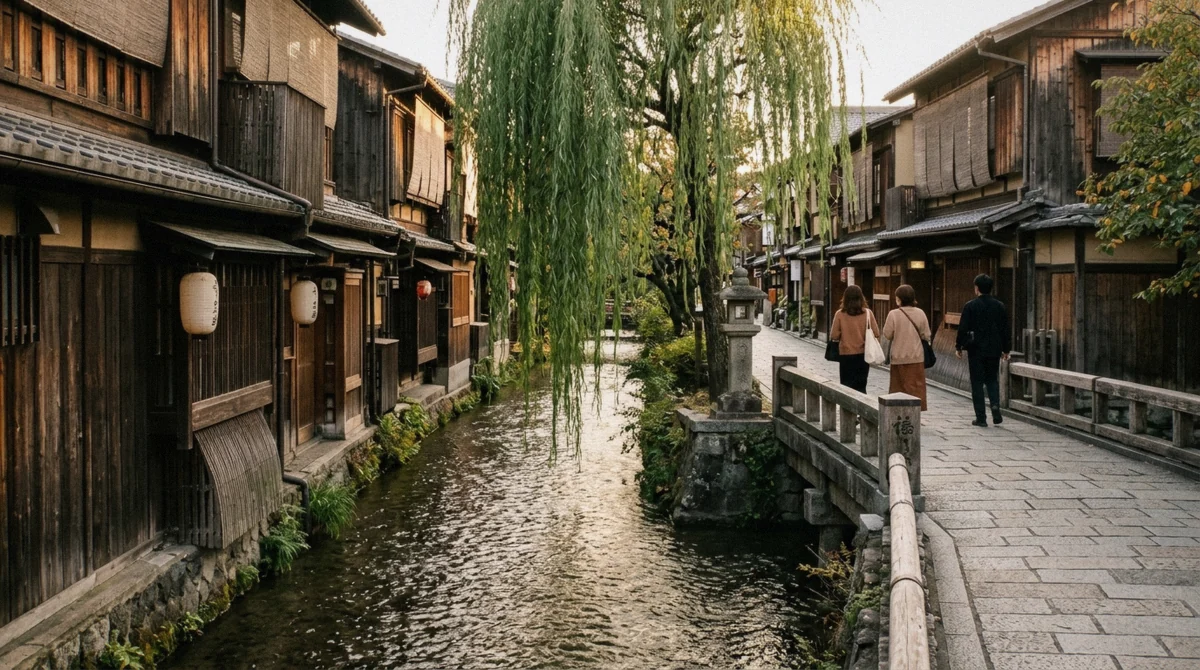
For most visitors downtown Kyoto is the better base, and Gion wins only for a specific kind of trip. Downtown means the Kawaramachi and Shijo area, where the Hankyu line, the Keihan line, the shopping streets and the Kamo River all meet. Gion sits directly east across the river and is a quiet, low-rise district of machiya, tea houses and ryokan.
The question is really whether you want a hotel in the district you came to see, or a hotel one river-crossing away with more choice around it.
Gion Corner's official access page puts the distance in minutes: 5 minutes on foot from Keihan Gion-Shijo Station and 10 minutes from Hankyu Kawaramachi Station. Downtown therefore costs you roughly one extra 5-minute walk each way, and in return gives you more places to eat after a 19:00 show, which Gion's small lanes offer less of.
Choose Gion if you want to walk Hanamikoji at 07:30 before the crowds, return to a quiet lane at night and do not mind carrying luggage on foot or by taxi. Choose downtown if you arrive by train, want a choice of restaurants and plan day trips on the Hankyu or subway lines.
What is the best area to stay in Kyoto for tourists?
There is no single best area, because Kyoto is spread out and each base trades a short walk to one thing for a long ride to another.
This table compares four bases by how they connect to Gion and to the five geisha districts. Walking times to Gion Corner come from the theatre's own access page, and the Kyoto Station and Kamishichiken notes from Kyoto Tourism.
| Base | To Gion Corner | What is close | Best for |
|---|---|---|---|
| Gion (Hanamikoji, Yasaka Shrine) | On foot, a few minutes | Gion Kobu, Gion Higashi, Miyagawacho | Evening atmosphere, early walks |
| Downtown (Kawaramachi, Shijo) | 10 min on foot from Hankyu Kawaramachi | Pontocho, Miyagawacho, Gion across the river | Restaurants, shopping, rail links |
| Kyoto Station | City Bus 206, then 5 min on foot | Shinkansen, JR lines, Keihan via Tofukuji | Short stays, day trips |
| Kitano Tenmangu (Kamishichiken) | Not walkable, far from the other four districts | Kamishichiken, Kitano Tenmangu | Setsubun and the Kitano Odori only |
Source: Gion Corner, Kyoto Tourism, Maikoya.
How far is downtown Kyoto from Gion?
Downtown is about 10 minutes on foot from Gion Corner, which sits at the western edge of Gion. The route is simple: you cross the Kamo River on the Shijo Bridge and keep walking east along Shijo-dori. Hankyu Kawaramachi Station and the Keihan Gion-Shijo Station both sit at the river, so the walk is flat and well lit.
The practical limits are luggage and weather. Kyoto Tourism advises against taking large luggage on city buses and points to the Hands-Free Travel counters at Kyoto Station, which send bags to your hotel or store them.
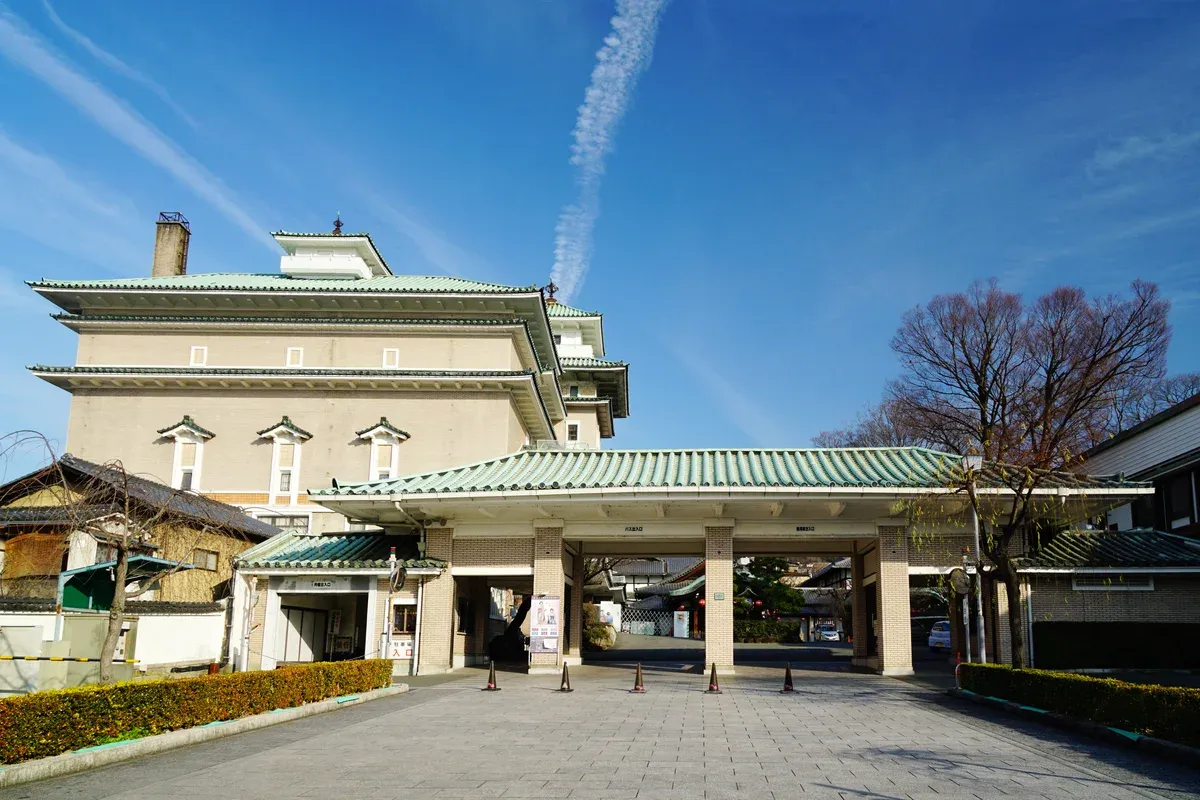
The Gion Kobu Kaburenjo, home of the Miyako Odori. Photo: 663highland, CC BY-SA 4.0, via Wikimedia Commons
Which base is best for seeing geisha shows and dances?
A base in Gion or downtown covers every show that runs most of the year, and only one district sits far away. Gion Corner plays at 18:00 and 19:00 for about 50 minutes. The five districts also stage their own public dances, each in its own theatre, called a kaburenjo.
This table lists the five annual public dances and where each district is, so you can see which base is closest.
| District | Annual dance | Month | Where it is |
|---|---|---|---|
| Kamishichiken | Kitano Odori | March | Around Kitano Tenmangu, northwest of the centre |
| Gion Kobu | Miyako Odori | April | Beside Yasaka Shrine |
| Miyagawacho | Kyo Odori | April | Southwest of Gion, north entrance at the Minamiza Theatre |
| Pontocho | Kamogawa Odori | May | West of Gion on the Kamo River bank |
| Gion Higashi | Gion Odori | November | East side of Gion, at the Gion Kaikan Theatre |
Four of the five sit within a short walk of the Shijo and Kawaramachi crossing, so a downtown base reaches all of them without a train. Kamishichiken is the exception: it is far from the other four districts and built around Kitano Tenmangu Shrine, so it needs a bus or taxi from either base.
Source: Kyoto Tourism, Maikoya.
Which base works best for winter 2026-27?
In winter the base matters less than the calendar, because the public stage thins out. Gion Corner plays Tuesday to Friday only from 1 December to 11 March, at 18:00 and 19:00, and not on public holidays. It is closed from 26 December to 4 January and on 11 February and 23 February.
This table puts each winter date for geisha performances next to the base that suits it best.
| Date | What | Best base |
|---|---|---|
| 1 December 2026 to 11 March 2027 | Gion Corner winter schedule, Tuesday to Friday, 18:00 and 19:00 | Gion or downtown, 5 to 10 minutes on foot |
| 26 December 2026 to 4 January 2027 | Gion Corner closed | Either base, book a teahouse show instead |
| 6 January 2027, 10:00 | Miyako Odori tickets go on sale, 5,000 to 8,000 yen | Either base, buy online |
| 3 February 2027 | Setsubun at Kitano Tenmangu with Kamishichiken geiko and maiko | Neither, travel by bus or taxi |
| 11 and 23 February 2027 | Gion Corner closed | Either base |
The Setsubun day is the one date where a Gion hotel gives you no advantage, because the festival is at Kitano Tenmangu in the northwest. Plan the trip there around the shrine's own stage times and book an evening show in Gion afterwards.
Source: Gion Corner, Kyoto Tourism.
Does staying in Gion help you see a maiko?
Not much, and it is easy to overrate. A Gion hotel puts you in the lanes at the hours a maiko is most often on the street, which is dusk, roughly 17:30 to 18:30, when she walks to an appointment. It does not put her in front of you on purpose, and she is working, so she has no time to stop.
Kyoto Tourism and the southern Gionmachi residents say it in plain words: geiko and maiko are not mascot characters. Do not stop, touch or follow them, and do not take unauthorised photos. The rules are enforced because about 15,000 sightseers walk Hanamikoji every day, according to the Gion Kagai Art Museum.
A sighting is luck. A show is a plan. The dependable way to meet a maiko from either base is the one-hour teahouse show or the shorter meet-a-maiko format.
For every option without a booking, read how to see a geisha in Kyoto without a tour.
Is Gion quiet at night, and what do residents ask of guests?
Gion is quiet because it is a residential district, and residents have written rules for visitors that apply to anyone sleeping there. The Gionmachi message on the Kyoto Tourism site lists photography, eating and drinking in the lanes and loud noise among prohibited acts, and says a resident's report can bring the police.
The residents' notice states these penalties:
- Obstructing someone's path or stalking: under 30 days' detention or a fine under 10,000 yen
- Pulling a hand or clothing: up to 6 months in prison or a fine up to 500,000 yen
- Trespassing on private property: up to 3 years in prison or a fine up to 100,000 yen
- Throwing away rubbish: a fine up to 30,000 yen by ordinance
- Loud noise: no penalty listed, but a serious nuisance to residents
The 10,000 yen charge posted on signs in the six private lanes has no statutory basis and is covered in the Gion photography rules. For a guest the working rule is simple: arrive quietly, do not eat while walking and keep your voice down after dark.
Source: Kyoto Tourism, Gion Kagai Art Museum.
How much does the Kyoto lodging tax add to a Gion stay?
Kyoto added a tier system on 1 March 2026, and it applies to every overnight guest per person per night, set by the room charge. This is an extra cost on top of any room rate in Gion or downtown, and the top tiers apply only to the most expensive rooms.
This table shows the five tiers from Kyoto Tourism with a dollar conversion at 159 yen to the dollar. The tier depends on the room charge per person per night.
| Room charge per person per night | Tax per person per night | About in dollars |
|---|---|---|
| Under 6,000 yen | 200 yen | $1.26 |
| 6,000 to 19,999 yen | 400 yen | $2.52 |
| 20,000 to 49,999 yen | 1,000 yen | $6.29 |
| 50,000 to 99,999 yen | 4,000 yen | $25.16 |
| 100,000 yen or more | 10,000 yen | $62.89 |
For two people sharing a room, check how your hotel splits the charge, because the tier is read per person. The tax does not change the Gion versus downtown choice by itself, but it adds a line to the bill that the nightly rate does not show.
Source: Kyoto Tourism.
Which Kyoto base is right for you?
If You arrive by shinkansen and stay one or two nights
Stay at Kyoto Station and use City Bus 206 to Gion, then book the after-dark Gion walk.
If You want restaurants, shopping and the geisha district on foot
Stay downtown near Kawaramachi, 10 minutes on foot from Gion Corner.
If You want quiet lanes at dawn and dusk and can carry bags by hand
Stay in Gion and walk Hanamikoji early, before the day crowds arrive.
If You came for Setsubun or the Kitano Odori
Stay downtown and take a bus to Kitano Tenmangu, since no Gion hotel is closer.
If You want one evening that includes dinner and a performance
Book the Gion dinner show from either base.
How do you meet a maiko, wherever you stay?
Book a show with a maiko, because the traditional route into her world is closed. Tea houses run on ichigensan okotowari, no first-time guests, so a booked teahouse show with an interpreter is the realistic way in. The authenticity of that arrangement is covered in are Kyoto geisha shows authentic.
If you want to check which format a first-timer should pick, compare them at Geisha Show Kyoto and read whether Gion is a tourist trap before you decide how much of the district to see on foot.
Frequently Asked Questions
Is Gion or downtown Kyoto better for first-time visitors?
Downtown is better for most first-timers, because it adds restaurants and train links while staying about 10 minutes on foot from Gion Corner. Gion suits visitors who want quiet lanes at night. A one-hour show with photos works from either base.
Can you walk from downtown Kyoto to Gion?
Yes. Gion Corner lists 10 minutes on foot from Hankyu Kawaramachi and 5 minutes from Keihan Gion-Shijo. The route crosses the Kamo River by Shijo Bridge and follows Shijo-dori east.
How do you get from Kyoto Station to Gion?
City Bus 206 runs from Kyoto Station to the Gion stop, then it is a 5-minute walk to Gion Corner. The Keihan line is the alternative, reached by changing at Tofukuji from the JR Nara Line.
Is it worth paying more to sleep in the geisha district?
Only if the atmosphere matters to you, because a Gion hotel does not put a maiko in front of you. Show tickets cost the same from any base, and the Kyoto lodging tax rises with the room charge, up to 10,000 yen per person per night.
Which base is best for Setsubun and the Kitano Odori?
Neither Gion nor downtown, since Kamishichiken is far from the other four districts. Stay downtown and take a bus or taxi to Kitano Tenmangu, then book an evening Gion walk afterwards.
Does staying in Gion make it easier to photograph a maiko?
No. Stopping a maiko to photograph her is prohibited, and the private lanes carry their own rules. See the photography rules before you carry a camera.