What Is a Geisha Fan?

A geisha fan is the folding dance fan that geisha and maiko hold in their dances, called mai ogi, and it is a working prop with ten sticks and a thick paper leaf. This page on what is a geisha fan explains the names of Japanese fans, how a dance fan differs from a souvenir, how a Kyoto fan is made and where to watch a fan dance at a Kyoto geisha show.
Quick answer
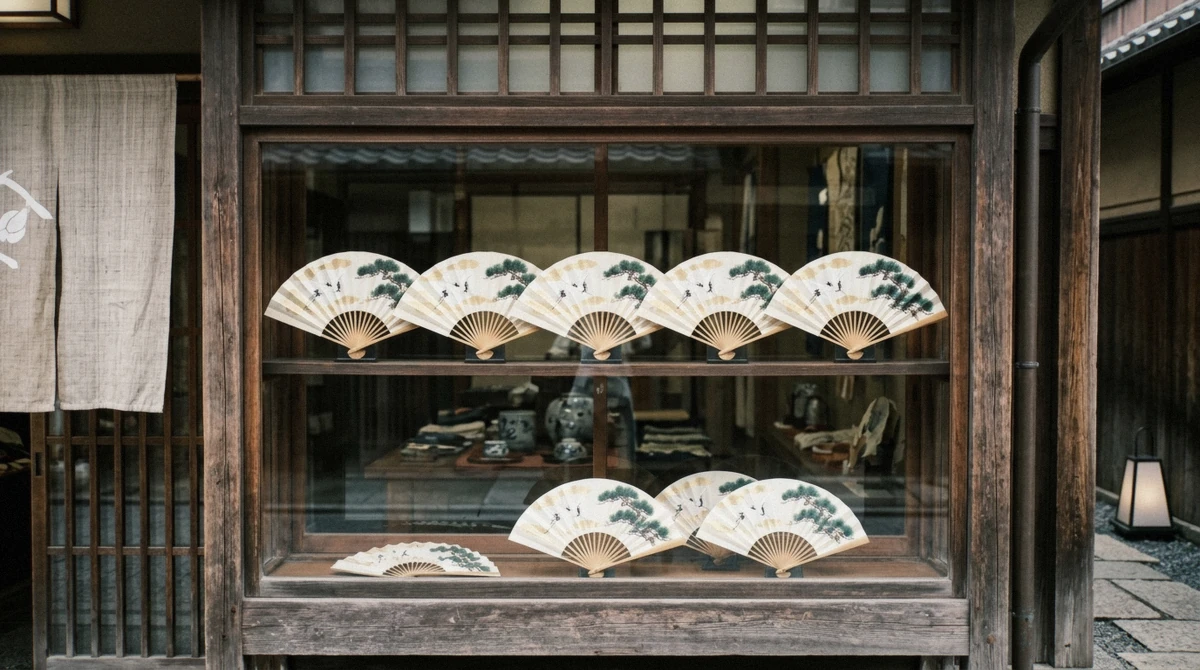
A geisha fan is the folding dance fan, called mai ogi, that geisha and maiko hold in their dances: it has ten sticks, a thick paper leaf and usually the same painting on both sides.
Key takeaways
- The dance fan is a folding fan with ten sticks and a thick paper mount that often shows a family crest, according to Wikipedia
- Geisha and maiko still use folding fans in their fan dances today, and the dance fan is a prop first and an accessory second
- Making a Kyoto folding fan takes about 87 steps shared among specialist craftsmen, Kogei Japan says
- The fan dancing code of secret signals is folklore, a fan seller admits, so do not expect a message in every flick
- You see dance fans in motion at a booked show or at the Miyako Odori, which runs 1 to 30 April 2027 in Gion Kobu
- The one-hour show with a Q&A lets you ask the maiko about her fan, and how geisha train explains the dance
Where can you watch a fan dance up close?
A fan is best understood in motion, in a room where the dancer is a few metres from you. These three bookings include a maiko performing.
 from $81
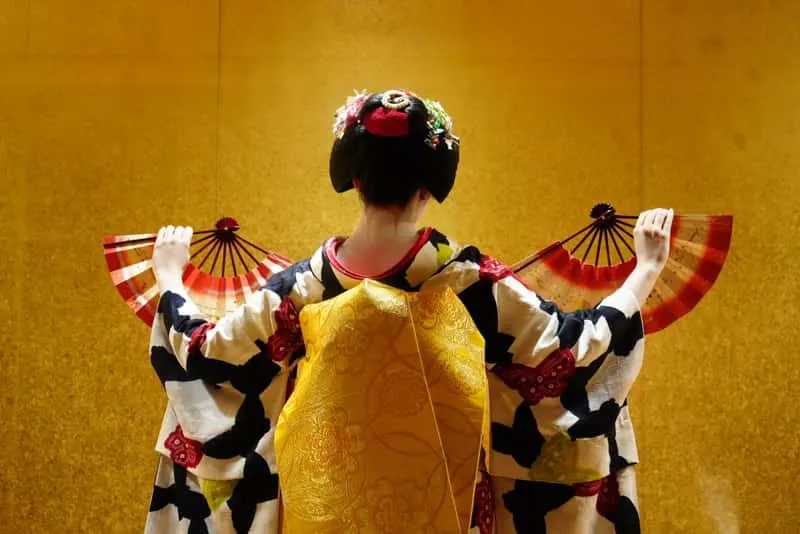
Authentic One-Hour Kyoto Geisha Show with Live Q&A and Photos
A focused one-hour geisha show in Kyoto featuring a live dance performance, an interactive Q&A, and a photo session with the performer. A quick, authentic way to see…
- Live geisha dance performance
- Interactive question-and-answer session
- Photos with the geisha included
- Near Kitano Tenmangu Shrine — easy to combine
 from $48
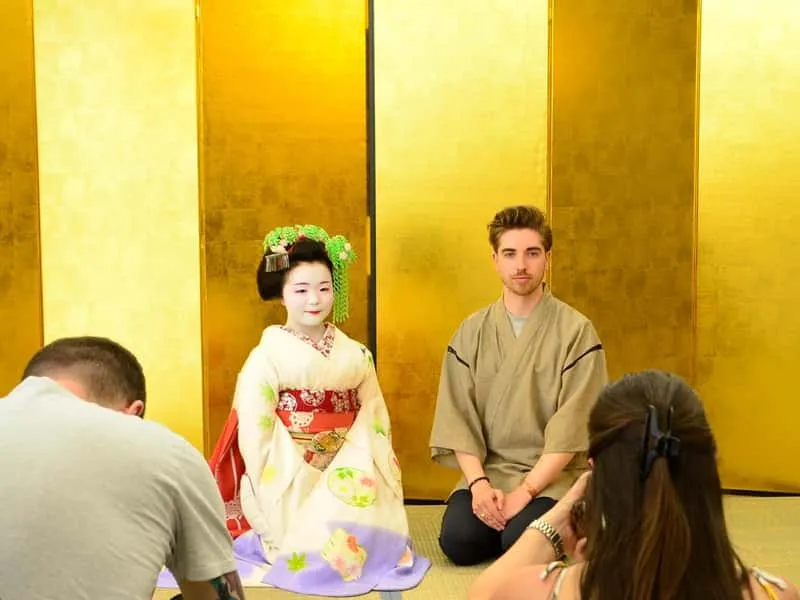
Meet a Real Kyoto Maiko — Intimate Show, Stories & Keepsake Photo
An affordable meet-and-greet with a Kyoto maiko, including a short dance, a friendly chat about apprentice life, and a keepsake photo. The most budget-friendly way to meet a…
- Meet and greet a real Kyoto maiko
- Short traditional dance performance
- Learn about apprentice geisha life
- Keepsake photo included — best value option
 from $60
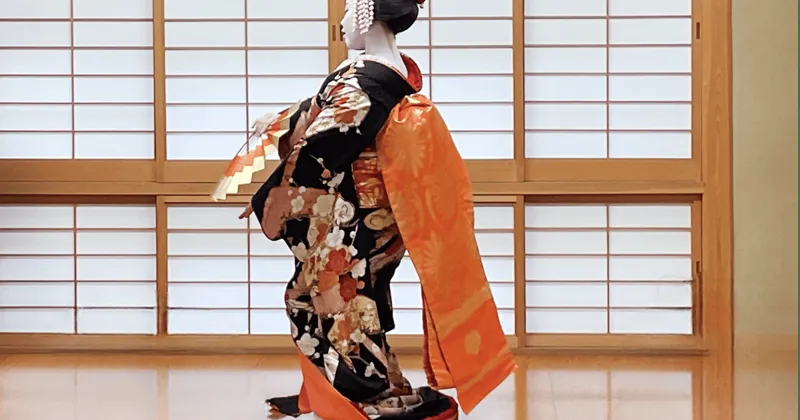
Meet the Geisha Maiko with Gion Walking Tour
Walk Gion's lanes with a local guide, then step into a private teahouse where a maiko and a former geiko dance to live music, answer your questions and…
- Maiko and former geiko dance in a private teahouse
- Optional 70-80 minute Gion walk, or show only
- Q&A with the maiko and a photo session
- Free cancellation up to 24 hours before
What is a geisha fan?
It is the folding fan that geisha and maiko dance with, called mai ogi, the dancing fan. Wikipedia describes it as a Japanese fan with ten sticks and a thick paper mount, often bearing the family crest, and says geisha and maiko still use folding fans in their fan dances. The Metropolis guide to Kyoto fans adds that dance fans show the same design on both sides, because the dancer turns and opens them in every direction.
So a geisha fan is a working prop, not jewellery or a charm. This page explains what the fan is called, how a dance fan differs from a souvenir fan, where the object comes from and how to see one used at a show in Kyoto.
Source: Wikipedia: Hand fan, Metropolis.
What is a geisha fan called?
This table sorts the fans you will meet in Kyoto by name, shape and use, with the source for each.
| Japanese name | Shape | What it is for | Source |
|---|---|---|---|
| Mai ogi | Folding, ten sticks, thick paper | Dance, including geisha and maiko dances | Wikipedia: Hand fan |
| Ogi or sensu | Folding | Court use first, then tea ceremony, dance, greetings and rakugo storytelling | Nippon.com |
| Uchiwa | Flat, non-folding | Cooling, grilling, cheering and shop promotion | Nippon.com |
| Tessen | Folding with iron ribs | Warrior fan, not a geisha's | Wikipedia: Hand fan |
The word to remember is mai ogi. When a Kyoto shop sells you a geisha fan, it is usually a sensu in the dance style. Nippon.com says Kyoto's sensu include mai ogi for traditional dance, and that folding fans are a standard Japanese souvenir popular with overseas visitors.
Source: Wikipedia: Hand fan, Nippon.com.
How does a geisha use a fan?
In dance, the fan turns into other objects. Fan seller Get My Fan says a dancer's posture, timing and angle with the fan can make it a wave, a rainstorm, a bird or a sigh in Nihon buyo and kabuki. Wikipedia says the dance style geisha practise evolved from noh and kabuki and uses gestures to tell a story and symbols to represent it, which is why the fan carries meaning without a word.
The fan is also part of daily etiquette. Nippon.com lists folding fans as part of Shinto ceremony, the tea ceremony and buyo dance, and as items used in greetings at tea ceremonies and weddings. Geisha who dance at an ozashiki use the fan the same way they use their hands and eyes, as one more tool of the performance.
Source: Get My Fan, Wikipedia, Nippon.com.
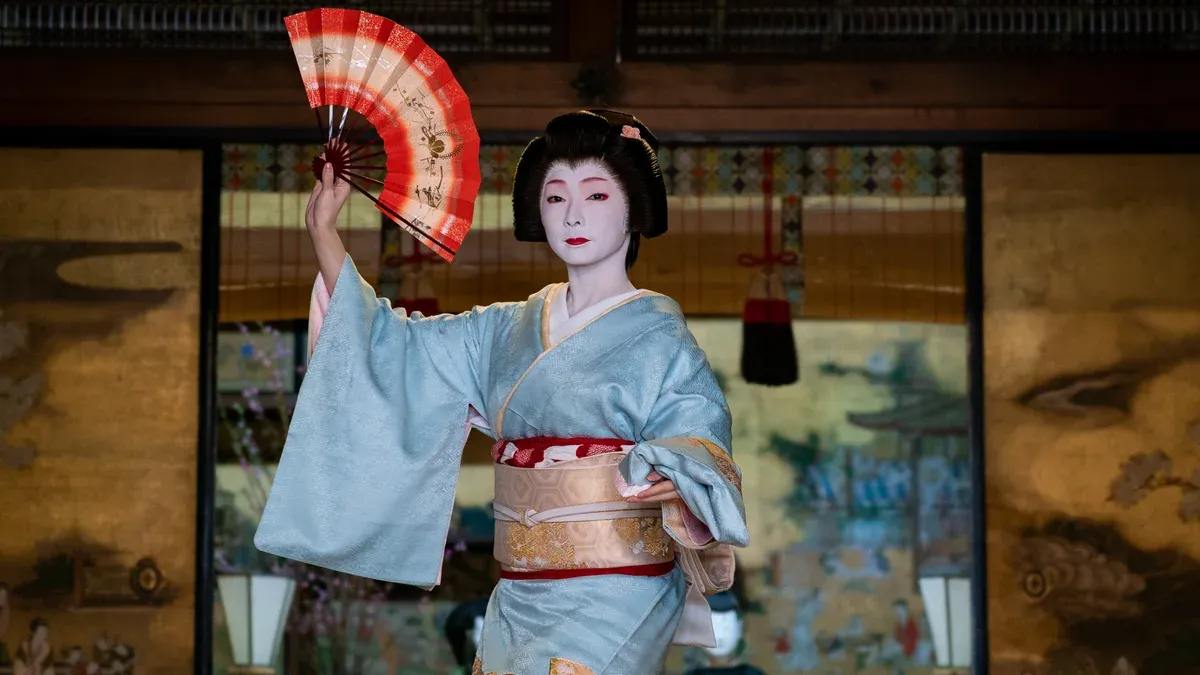
Geiko Toshimana dancing with a folding fan, Kyoto. Photo: Sawai Susao, CC BY-SA 2.0, via Wikimedia Commons
Do geisha fans have a secret language?
Not a fixed one. Get My Fan, itself a fan seller, says the romantic notion of a fan alphabet, where opening the fan at the middle means meet me, is largely folklore. Gestures with a fan do carry nuance, it adds: a slow opening can show patience, a partly hidden face can show modesty and a sharp snap can mark a decision.
That matches how the fan appears in a Kyoto performance, where the meaning sits in the dance and not in a code. If a guide claims a geisha can invite or dismiss you by the way she holds a fan, treat it as a story. In a real room, conversation and pouring etiquette do that work.
For what happens at a banquet, read what a geisha actually does.
Source: Get My Fan.
Where does the Japanese folding fan come from?
Japan. Wikipedia says the folding fan was invented in Japan, with dates ranging from the sixth to the ninth century, and names the earliest form as the court fan akomeogi. Nippon.com puts the origin in the early Heian period, around the ninth century, first as ogi, and notes ogi appear in The Pillow Book of the late tenth century and in The Tale of Genji.
Court men first used them to write notes on etiquette. The fan later spread into Shinto ceremony, tea and dance, and the Metropolis guide says folding fans were exported to China and used by European royalty, who adapted the designs to Western taste. The flat uchiwa came to Japan from China, with finds from the Kofun period and a name established around the twelfth century, per Nippon.com.
Source: Wikipedia: Hand fan, Nippon.com, Metropolis.
How is a Kyoto fan made?
By many hands. Kogei Japan, a Japanese crafts guide, says a Kyo-sensu takes about 87 production processes, each with its own craftsman. The work falls into three stages: making the ribs, making the fan surface and joining the two.
Each stage belongs to specialised craftsmen, which is why a good fan cannot be made by one person in one workshop.
Kyo-sensu was designated a Traditional Craft by the Japanese government in 1977. Get My Fan describes the structure of a folding fan as ribs, two stronger outer guards that protect the leaf when closed, and a leaf of washi, silk or layered paper, often painted with seasonal motifs such as cranes, pine and cherry blossom.
Source: Kogei Japan, Get My Fan.
What should a dance fan look like?
This table gives the features that published sources attach to a dance fan, so you can check one in a shop or from your seat.
| Feature | What to look for | Source |
|---|---|---|
| Sticks | Ten sticks and a thick paper mount | Wikipedia: Hand fan |
| Crest | Often a family crest on the mount | Wikipedia: Hand fan |
| Design | The same painting on both sides | Metropolis |
| Hinge | Opens smoothly and holds its shape | Get My Fan |
| Handling | Hold it by the guards, not the painted leaf | Get My Fan |
The first three rows describe the mai ogi itself. The last two are buying advice from Get My Fan: open and close the fan gently, check the hinge and edge alignment and handle it by the guards. A cheap fan can still be a pleasant gift, but a fan built for dance is the one that survives being turned and snapped open through a whole piece.
Source: Wikipedia: Hand fan, Metropolis, Get My Fan.
What do the pictures on a geisha fan mean?
Each motif carries a meaning, according to Get My Fan: cranes stand for longevity, wisteria for love, cherry blossom for fleeting beauty and pine for steadfastness. The seller adds that the best designs leave empty space on the leaf, the aesthetic of ma, the breathing room between things.
Treat these as the common reading and not a strict code, in line with the fan-alphabet warning above. Designs vary by maker and by dance, and no single list covers every fan. If you want to know what a particular painting means, ask the craftsperson who made it or, at a show with a Q&A, the maiko who dances with it.
Her answer will be more reliable than a souvenir leaflet.
Source: Get My Fan.
Where can you see a geisha fan dance in Kyoto?
At a booked show, at Gion Corner or at the spring odori. The Miyako Odori at the Gion Kobu Kaburenjo runs 1 to 30 April 2027, and Miyako Odori tickets go on sale on 6 January 2027 at 10:00. Gion Corner stages the kyomai, Kyoto's dance performed by a maiko, as one of seven arts, at 18:00 and 19:00 and on Tuesday to Friday only in winter.
A teahouse show gives the closest view, because the dancer is a few metres from you. The meet-a-maiko show includes a short traditional dance. The one-hour show with a Q&A adds questions, so you can ask about her fan, and the private hour gives a dance for your group alone.
See how to see a geisha without a tour for the public stage options.
Source: Kyoto Gion Corner.
Where can you buy or try a fan in Kyoto?
Near Gion, Ogiya Hangesho is a fan maker and dealer in a former geisha house, according to Metropolis, and it runs a workshop where visitors paint a summer fan or a dance fan. The article gives the address as Nishigomon-cho, Matsubara-sagaru, Shin-miyagawacho-dori in Higashiyama-ku, near Gojyo-Keihan station, and says tosenkyo, an Edo-period game of throwing a fan at a target, can be reserved there. The government banned tosenkyo at one point because of heavy betting.
Buy from a craftsperson or a specialist shop where you can handle the fan. Get My Fan advises buying directly from artisans where possible, because their demand keeps the craft alive, and warns that cheap mass-market fans often use plastics and unstable pigments that degrade quickly. Confirm the workshop's current schedule and prices with the venue before you plan around them.
Source: Metropolis, Get My Fan.
Is it respectful to buy a geisha fan as a souvenir?
Yes. A folding fan is a standard Japanese souvenir, Nippon.com says, and buying one from a Kyoto craftsperson supports the trade. What matters is not mistaking the object for permission to approach the people.
Kyoto's residents ask visitors not to stop, touch, follow or photograph geiko and maiko without consent, as the official Kyoto tourism message states.
If you want a picture with a fan and a maiko, book a performance. A Gion walk with a maiko show includes a Q&A and a photo session, and our guide to Gion photography rules covers what you may photograph on the street.
Source: Kyoto Tourism, Nippon.com.
What is the realistic way to see a geisha fan in use?
Book a show with a maiko. A fan only makes sense in motion and the public street gives you nothing of the dance. The cheapest route is the 45-minute meet-a-maiko show at $48, the most-reviewed show is the one-hour show at $81 and the most personal is the private hour at $720 per group.
Browse every current geisha show in Kyoto and pick the format that fits your evening. If your dates fall in April, add the Miyako Odori, where the whole district dances with fans on one stage.
Frequently Asked Questions
What do geisha use fans for?
Dance, chiefly. Wikipedia says geisha and maiko use folding fans in their fan dances, and Nippon.com adds greetings and ceremonies as other uses of folding fans.
What is a Japanese dancing fan called?
Mai ogi, a folding fan with ten sticks and a thick paper mount, according to Wikipedia.
Are geisha fans folding or round?
Folding for dance. The round fan is the uchiwa, a flat fan used for cooling and shop promotion.
Can I buy a real geisha fan?
Yes. Kyoto craft shops sell folding fans in the dance style, and a workshop near Gion lets visitors paint one, Metropolis reports.
Do geisha use fans to send signals?
Not by a fixed code. Get My Fan calls the fan alphabet folklore.
Where can I watch a fan dance?
At the Miyako Odori in April, at Gion Corner or at a booked show such as the meet-a-maiko show.